
UK Crypto Gambling Laws for Baseball Bettors
 Available in US
UKGC and FCA Rules for Crypto Sportsbook Operations
The first thing I tell anyone asking whether they can legally bet on baseball with Bitcoin from a flat in Hackney is that there is no single answer because there is no single regulator. Most of the confusion in this space comes from people looking for a “crypto sportsbook law” that does not exist. What exists is three parallel regimes — UKGC, FCA, HMRC — each one targeting a different surface of the same activity, each with its own thresholds, its own paperwork, and its own way of going wrong if you ignore it.
The UKGC regulates the operator — the sportsbook itself — and tells UK-licensed bookmakers what they can and cannot accept as payment. The FCA regulates the cryptoasset side — the exchange, the wallet provider, the stablecoin issuer — and is in the process of bringing those firms into a full prudential regime. HMRC regulates you, the player, and only really cares about two questions: how the cryptocurrency moved through your hands and whether anything was disposed of along the way. Each of these regulators has authority. None of them has authority over the others. A bet that is fine from the UKGC’s point of view can still trigger an HMRC capital-gains entry, and a sportsbook deposit that the FCA does not regulate can still get your bank account frozen.
This article walks through the three regimes the way I have learned to think about them after several years of betting MLB from the UK with a mix of BTC and stablecoins. I am not a lawyer and nothing here is legal advice. What follows is the working map I keep in my head when I size a bet, structure a wallet, or fill in a self-assessment form in January.
Beyond licensing and FCA rules, British punters must also be fully aware of how UK tax on crypto baseball winnings is calculated by HMRC.
What the UK Gambling Commission actually says about crypto
“What I thought was a five-year-away problem, perhaps a year or two ago, I think is now an 18-months-to-two-years challenge.” That sentence — Andrew Rhodes, the UKGC’s chief executive, speaking in November 2025 — is the cleanest summary I have heard of where the British regulator stands on cryptocurrency. The Commission knows this segment is not going away. The Commission also has not licensed it. The gap between those two facts is where every UK crypto baseball bettor lives.
The UKGC’s position is operational, not ideological. Licensed operators in the UK are not permitted to accept cryptocurrency, because their banking relationships, AML reporting obligations and source-of-funds workflows are built around fiat rails. Crypto disrupts those rails, and the regulator has not yet seen a model where a licensee can offer crypto deposits without compromising the AML chain it has spent two decades building. So the rule is simple: UK-licensed sportsbooks accept GBP. Crypto-accepting sportsbooks operate offshore. There is no third option.
Rhodes has been unusually candid about why this matters. “The growth in cryptocurrencies amongst younger demographics means that there is a pressure building within the system,” he told the IAGR conference in late 2025, framing crypto adoption among 18–34s as a structural challenge for the licensed industry. He has also been careful to put any future licensing decision out of his own hands: “That’s not me committing to saying we’re going to start licencing crypto. This is going to have to be government-level discussion, and it is a government-level decision because once you open that door, you cannot close it.” That is not a bureaucratic dodge. It is the regulator saying that opening crypto licensing without a settled framework would be irreversible — and therefore is not something the UKGC will do unilaterally.
Meanwhile, the offshore market is large and active. “Right now, we don’t have any licensed operators offering crypto. But in the illegal market, it is widespread,” Rhodes acknowledged. The Commission’s stated view of that market is uncompromising — Rhodes again: “There is nothing more exploitative than the illegal market. Our focus has been disrupting illegal gambling upstream — making it harder to find and operate.” That is the philosophical underpinning of every cease-and-desist letter and every URL takedown the UKGC has run in the past two years. The Commission is not trying to license crypto sportsbooks. It is trying to constrict the routes that lead to them.
For UK players, the practical implication is that any crypto baseball sportsbook you use sits outside the licensed perimeter — by definition, not by accident. That does not make the bet itself illegal at the player level (the UK does not criminalise the act of placing a wager on an unlicensed operator). It does mean every protection the UKGC offers — dispute resolution, mandatory bonus standards, automated withdrawal performance — is unavailable to you. You are operating without a regulatory backstop.
The FCA, FSMA, and what changes in October 2027
The FCA’s 2026 cryptoasset regime is one of those regulatory shifts that is talked about as if it is already in force, even though it is not. The FSMA Cryptoassets Regulations were laid before Parliament on 4 February 2026, with the operative provisions due to start on 25 October 2027. Until that date, the regime is a published intent, not a binding rulebook for the firms involved. From that date, several activities — running a centralised exchange, providing custodial wallets, issuing stablecoins, intermediating crypto trading — fall under FCA authorisation.
What does and does not change for a baseball bettor matters here. The CEX where you buy your BTC — a Coinbase, a Binance, a Kraken — comes inside the perimeter. The custodial wallet provider, if you use one, comes inside. The stablecoin issuer behind your USDT or USDC balance comes inside. None of those firms can operate UK-facing services after October 2027 without FCA authorisation, and the consultation makes it clear that authorisation will require capital, governance and disclosure standards that look like a watered-down version of bank regulation.
What does not change is the sportsbook. A crypto sportsbook is not a cryptoasset firm under the FSMA classification — it is a gambling business that happens to accept cryptocurrency. The FCA does not regulate it before October 2027 and does not regulate it afterwards. So the FCA regime will tighten the on-ramp (the CEX) and the off-ramp (the wallet) without touching the venue (the sportsbook). For a UK player, that means tighter KYC at the exchange when you buy crypto, more disclosure when you withdraw to an external wallet, and the same offshore sportsbook on the other end as today.
The FCA executive David Geale framed the proposals like this when the consultation opened: “Regulation is coming – and we want to get it right. We’ve listened to feedback, and now we’re setting out our proposals for the UK’s crypto regime. Our goal is to have a regime that protects consumers, supports innovation and promotes trust.” That is the official register. The practical translation is that by late 2027, every UK-resident user of a centralised crypto exchange will be moving funds through a fully regulated entity that reports to a UK regulator — and any pretence of crypto being outside the financial system, on the consumer side, will be gone.
How HMRC sees a single MLB bet
UK tax on gambling is one of the friendliest regimes in the developed world: as a player, your winnings on a sports bet are not taxable income. That principle has not changed and is not under threat. The complication is that the moment a cryptocurrency is involved, you are no longer just placing a bet — you are also doing something HMRC treats as a series of asset disposals.
Walk through a single MLB bet from the HMRC angle. You buy 0.001 BTC at the prevailing price. That is the acquisition. Cost basis is locked in at the GBP value at the moment of purchase. You send that 0.001 BTC to the sportsbook deposit address. That transfer, as long as the wallet at the other end is recognised by HMRC as still under your control, is not a disposal — but if the sportsbook holds the balance in its name, an argument can be made that the moment of deposit is a disposal at the GBP value of BTC at that instant. You place a wager. The wager itself is a gambling transaction, not a CGT event. The bet wins; the sportsbook credits your balance with, say, 0.0018 BTC. You withdraw to your wallet. Now the balance comes back into your control at a new cost basis, the GBP price of BTC at the moment of withdrawal. You convert back to GBP on a CEX. That is a clean, undisputed disposal — gain or loss calculated against the cost basis you established at withdrawal. If the BTC price moved while your bet was open, that movement is a CGT figure separate from anything to do with the bet itself.
This sounds like a lot. Most of the time it does not generate tax in any practical sense, because the annual CGT exemption (£3,000 for the 2024–25 tax year, with the 2025–26 figure on the same trajectory) absorbs small movements. The trouble starts when you bet a lot, hold positions in volatile coins, or convert in size. I track every transaction — date, GBP rate, txid, source wallet, destination wallet — in a spreadsheet I update the same day. Annual reconciliation takes me an evening rather than a weekend in March. I have written through the cost-basis arithmetic, the S104 pool mechanics, and the precise CARF reporting changes in the UK tax treatment of crypto baseball winnings, where the disposal chain is worked through in detail.
The CARF (Cryptoasset Reporting Framework) layer is the one most people miss. HMRC’s domestic CARF impact assessment, published in November 2025, sets out how UK CEXes and other reporting cryptoasset service providers will start sending HMRC structured data on UK users from January 2026 onwards, with first reports landing in 2027. The IA notes that 76% of UK cryptoasset owners are between 16 and 44 — a group that is 46% of the adult population — and that 69% are men. Those demographic numbers tell HMRC where to look, and CARF gives them the data to look at. The era when an unreported CGT entry on crypto was, in practice, invisible to HMRC ends when CARF reporting goes live.
Navigate the complex regulatory landscape safely with the premier UK crypto baseball betting guide.
AML, source of funds, and why “no-KYC” is a half-truth
Every offshore sportsbook is subject to AML obligations under its home jurisdiction’s rules. The strictness of those rules varies — Curaçao’s reformed LOK framework in 2026 is materially tighter than the old master-licence regime, but no offshore regime is as exacting as the UKGC’s. Yet even the lightest-touch operator faces correspondent banking pressure, payment-processor risk policies, and on-chain analytics tools that flag transactions linked to known mixers, sanctioned addresses, or money-laundering networks. So “no-KYC” is rarely “no-KYC, ever”. It is “no-KYC up to a threshold”. Past that threshold, source-of-funds questions arrive.
The Chainalysis 2025 Crypto Crime Trends report puts the share of stablecoins in illicit crypto flows at 63% of measured volume, with overall illicit transactions estimated at $40 billion (and revised projections pushing toward $51 billion). Chinese-language money-laundering networks — what Chainalysis calls CMLN — moved roughly $16.1 billion in 2025, around $44 million a day, and gambling services are a known fragmentation vector for those networks. None of that has anything to do with you betting a Yankees moneyline. But it shapes how your sportsbook’s compliance team treats a $5,000 stablecoin withdrawal to a fresh wallet at 3am London time.
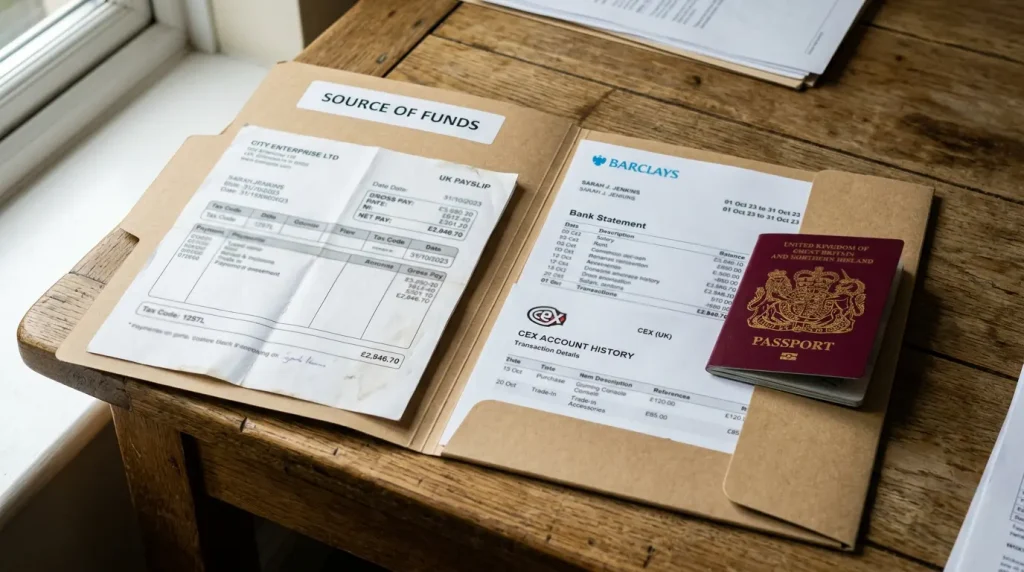
What triggers a source-of-funds request in practice: large first-time deposits, frequent withdrawals at sizes inconsistent with declared activity, deposits originating from addresses with on-chain history of mixer use, and withdrawals to addresses that on-chain analytics flag as previously associated with sanctioned or high-risk activity. The request itself is mundane — bank statement, payslip, CEX history — but the time pressure is not. A sportsbook that asks for source-of-funds on a withdrawal can sit on the funds for days while the compliance team reviews. I keep my CEX history exportable, my last six months of bank statements scannable, and a clean P60 in a folder. Not because I expect to use them, but because the day I am asked is not the day I want to start digging.
Duty rate changes and what they do to crypto sportsbooks
The Autumn 2025 Budget contained the biggest tax change to UK gambling in a decade, and it has consequences for crypto operators even though they are not the target. From 1 April 2026 the Remote Gaming Duty rises from 21% to 40% — almost a doubling. From 1 April 2027 a separate Remote Betting Rate of 25% replaces the existing 15% on online sports betting (UK horseracing is excluded and stays at 15%). HM Treasury and OBR analysis indicate that operators are expected to pass up to 90% of the increase to consumers through tighter prices and worse promotions, with the package raising over £1 billion a year for the Exchequer.
“There is plenty of evidence that online gaming, in particular, but also online betting result in more serious harms than in-person betting. That is why we chose the package that we chose,” Rachel Reeves told the House of Commons in defending the rate change. The policy intent is to compress the licensed online margin and use the revenue to fund harm-reduction work, with an additional £26 million allocated to the UKGC over three years specifically to attack the unlicensed/offshore market.
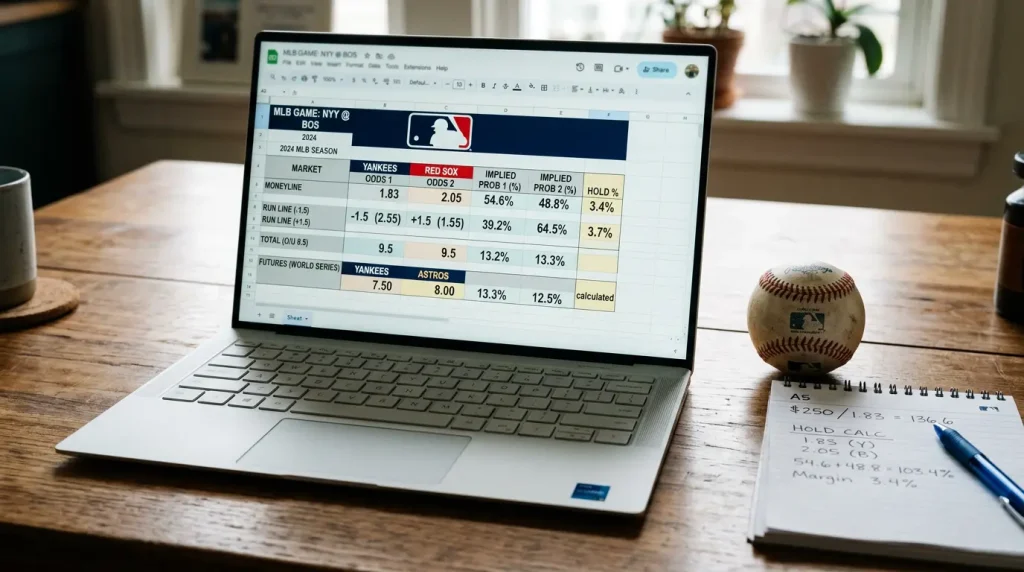
For a UK player on a crypto sportsbook, the mechanics work the other way. Crypto operators are not subject to UK Remote Gaming Duty or the new Remote Betting Rate, so their cost base does not move. As licensed UK fiat books pass tighter pricing through to their customers, the relative pricing edge of crypto sportsbooks improves at the margin — the same MLB run line that costs you 1.83 on a UK fiat book might price 1.92 on a crypto book that has not had to absorb a duty rise. That is the mechanical effect.
The countervailing force is the £26 million directed at the UKGC’s unlicensed-market team. More cease-and-desist letters, more URL takedowns, more search-engine demotions, more bank-side payment friction. The pricing edge widens on the surface; the access path narrows underneath. Which side of that wins for any individual bettor depends on which crypto sportsbook they use and how aggressively the UKGC keeps building its enforcement capability.
Enforcement: what 806 letters in twelve months actually changes
Numbers help with this part. Between October 2024 and September 2025 the UKGC’s illegal gambling team sent 806 cease-and-desist letters to operators targeting UK audiences and blocked 314 unregulated sites. The same period saw a 300% year-on-year rise in the number of criminal cases the regulator is leading personally, and roughly 200,000 URLs were referred to search engines for action — about 100,000 of which were removed.
That is what active enforcement looks like, and it has practical consequences for a UK crypto baseball bettor that go well beyond the symbolic. The first is search visibility. A sportsbook on the cease-and-desist list will, over time, lose Google rankings to competitors that have not been flagged. The second is payment friction. UK banks read enforcement publications. A Faster Payments transfer from your account to a CEX you have used for years will suddenly trigger a phone call when the CEX is later linked, even tangentially, to one of those URLs. The third is access. Sites that get a determined push from the UKGC’s takedown unit start running into ISP-level filtering, certificate revocations, and domain juggling — the user experience degrades visibly, and the day-to-day reliability of the sportsbook gets worse.
None of this happens overnight. A flagged site can keep operating for months after the first letter. But the trajectory is one-way. A sportsbook on the active enforcement list today will be harder to reach in six months and possibly inaccessible in a year. That is why the enforcement list is one of the first things I check before depositing — not because I expect immediate disruption, but because I am deciding whether to put a bankroll somewhere that is structurally degrading.
Why crypto sportsbook ads do not show up on a British IP
The FCA’s financial promotion regime treats most cryptoasset advertising as a regulated communication that must either be approved by an authorised firm or fall under a specific exemption. That regime started biting in late 2023 and has tightened since. A crypto sportsbook that wants to run UK-targeted ads has, in practice, two options: route the promotion through an FCA-authorised approver willing to take on the gambling-product element (rare and expensive), or geofence the advertising to non-UK traffic.
Most operators take the second route. That is why a British IP browsing a sportsbook affiliate site sees fewer, more anodyne crypto sportsbook ads than a US or Canadian visitor sees on the same page. The financial promotion rules are also why offshore crypto sportsbooks rarely run social media campaigns that explicitly promote crypto deposit bonuses to UK users — the promotional risk is too high for the operator’s UK-facing affiliates to absorb. The marketing silence around UK crypto sportsbooks is not coincidence; it is regulatory effect.
What a careful UK bettor actually does
The compliance work that falls on a UK crypto baseball bettor is not theoretical. It is a small set of habits that, done weekly, prevent every problem I have seen friends run into. None of these is hard. All of them are tedious. The difference between people who never have a tax issue or a bank-side freeze and people who do is whether the habits are in place from the first deposit, not the first crisis.
I log every transaction the day it happens. Date, time, GBP price of the asset at that moment (from a CEX feed, not a memory), wallet source, wallet destination, txid, sportsbook account if relevant. The log lives in a spreadsheet that I export monthly. CARF reporting going live in 2026 means HMRC will see most of the on-ramp side anyway; my log lets me reconcile what the form will show against what actually happened.
I never use a mixer or a privacy-focused tumbling service before depositing on a sportsbook. Even if the rest of my activity is entirely legitimate, on-chain analytics will flag the deposit, and my UK bank — which monitors the CEX-side transactions as part of its own AML work — will at minimum ask awkward questions and at worst close the account. The cost of a closed bank account dwarfs any privacy benefit.
I keep a “verification kit” — six months of bank statements, the most recent CEX activity export, my latest P60, a utility bill — in an encrypted folder on my computer. The day a sportsbook asks for source-of-funds, I want to spend twenty minutes responding, not three days reconstructing a record.
I file self-assessment whenever the year’s crypto disposals push past the annual CGT exemption, and I file even in years when I am clearly under the threshold but my activity has been busy enough to make the question worth raising. The HMRC penalty regime is structured around late and inaccurate filing rather than late payment per se, so the tax mechanics matter less than the discipline of putting an accurate return in on time.
None of this turns betting MLB with crypto from the UK into a “compliant” activity in the licensed-operator sense — that is structurally not on offer. What it does is keep your records, your bank account and your tax position clean, so that when something goes wrong on the sportsbook side, you are not also fighting fires at HMRC and at NatWest at the same time. That is the realistic version of regulatory hygiene for a 2026 UK crypto baseball bettor.
Articles


Written by the editors at BlockPlate.
