
Hit-a-Home-Run Prop Bets at Crypto Sportsbooks
 Available in US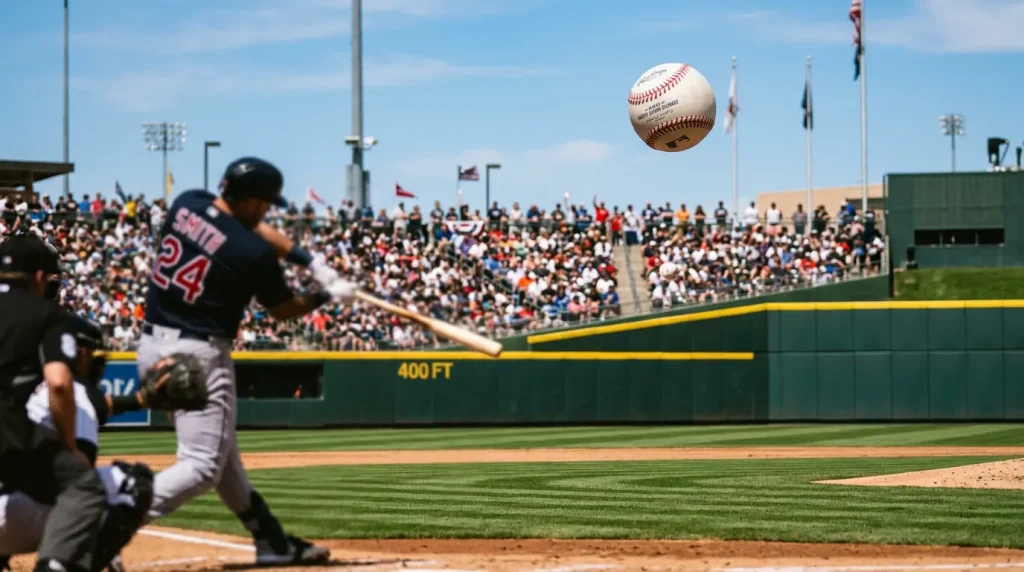
Factoring Ballparks and Weather into Home Run Odds
If you had asked me a decade ago which baseball market would end up the dominant one by handle, I would have said run line, totals, then maybe the moneyline. Hit-a-home-run was a novelty bet you placed on a Saturday afternoon for a laugh. That world has gone. By 2025, the hit-a-home-run prop had become the single most popular MLB market by volume on FanDuel, the largest fiat operator in North America, with very nearly half of all FanDuel’s MLB customers placing a “Dinger Tuesday” home run bet at some point in the season. The number of MLB players who hit twenty or more home runs in the regular season climbed to 94. Home runs are not a side dish any more.
FanDuel’s commercial team have been candid about engineering this. The way the market has been positioned – as the headline product associated with baseball, not as a curiosity – has worked precisely because home run swings are the moment of every broadcast that ends up on social media. Matthew Heffley, who runs the category for FanDuel, framed it as wanting customers to associate the brand immediately with home runs because the operator consistently provides the best home run betting experience. That framing has consequences for any crypto bettor pricing the same market on a different book – the public has been trained to want this bet, and the public taste lives on the over.
This guide is about how I actually place hit-a-home-run wagers on crypto sportsbooks, what I model, and where the trap doors are.
The market in plain language
“Player to hit a home run anytime” is the headline product. You pick a batter, you bet “yes” he hits at least one home run during the game, settlement happens at the final out. Most crypto books frame it as a yes/no with the yes side priced anywhere from plus-three-hundred for elite power hitters in friendly parks against soft pitching, up to plus-eight-hundred for utility infielders facing aces.
“First home run scorer of the game” is a tougher version of the same idea. You are picking the right player and effectively also picking the order. The price is fatter – plus-eight-hundred on a leadoff slugger is reasonable – but variance kills you over a sample. I treat first-HR-scorer as a recreational play, not a model-driven one.
“Team total home runs over X” is the version of the market that makes more analytical sense for some matchups. If a long-ball offence faces a fly-ball pitcher in a hitter’s park, total team home runs over two and a half can be cleaner expected value than picking which specific player connects.
What actually drives the price
Park factor first. A home run prop in Yankee Stadium with the short right-field porch behind a left-handed pull hitter is a different animal from the same player at Oracle Park or T-Mobile Park. Coors Field is in its own category and the books know it; do not expect to find a soft Coors home run line. The minor adjustments come from foul territory and outfield depth, but the dominant factor is the fence map and the wind direction.
Pitcher home run rate is the second pillar. Look for HR/9 across the last twelve months – not career – because pitchers age into and out of home run trouble in tight windows. Pair that with fly-ball percentage. A pitcher with a low ground-ball rate is a pitcher who lets balls get into the air, and balls in the air against power hitters in a hitter’s park are how home run props pay.
The hitter side is where modern data has changed the conversation. Barrel rate is the headline number – the percentage of batted balls leaving the bat at the launch angle and exit velocity that historically produce extra-base damage. Hitters with elevated barrel rates and elevated hard-hit percentages are the ones whose home run props are still occasionally underpriced, especially against pitchers the public does not strongly associate with home run vulnerability.
Then there is the platoon split. Right-handed power hitters versus left-handed pitchers, and the reverse, is the simplest predictive split in baseball after the strikeout itself. Crypto books generally price platoon advantage into the home run line, but smaller operators sometimes lag the obvious move when a left-handed starter is announced for a lineup heavy with right-handed power.
Weather is the tiebreaker. Wind blowing out at fifteen miles an hour in Wrigley turns a marginal home run line into a play. Wind blowing in at the same speed kills it. Forecasts shift in the hour before first pitch and the line will sometimes drift in response, sometimes not. The lazier the operator, the longer the line takes to react.
One contextual note that is easy to miss: the Cloudbet spokesperson observation that nobody is surprised that basketball, soccer and tennis top the popularity list at a crypto book, but the way they top it tells you something interesting about how crypto bettors actually behave – soccer drawing more individual bets, basketball more total money – applies to baseball too. Home run props sit at the soccer-style end of the distribution. Lots of small tickets from many bettors. That informs how the operator prices and limits the market.
Where to find the line on a crypto book
Player home run props are now standard fare on the larger crypto sportsbooks. Cloudbet’s 2026 numbers showed baseball volume growth of around thirty per cent year on year on a platform already covering more than forty sports and esports, and player props are a meaningful slice of that handle. Smaller crypto books typically only post home run props on featured games – Yankees, Dodgers, Braves, occasionally a high-profile Friday-night divisional matchup – and skip the slate’s lesser fixtures entirely.
If a crypto book offers home run props on every game, that is a positive signal about its trading desk. If it offers them only on the headline game, you are being shown the games the operator is most confident in pricing, which means the others are either offered with a wider hold or simply skipped because the trader knows the line would leak value.
The other thing to watch is which props clear bonus wagering. Many crypto sportsbook bonus terms exclude or reduce contribution from player props, and home runs specifically are sometimes singled out because the variance is high enough to threaten the operator’s bonus economics. Read the bonus tab before deciding to clear rollover with a stack of plus-five-hundred home run tickets.
Stake size on a market that pays five-to-one
The maths here is unforgiving. Home run props at plus-four-hundred or plus-five-hundred mean you need to land roughly one in five or one in six picks to break even. Even a sharp model that genuinely beats the market will run through five and seven and ten miss streaks, because that is what variance does at those prices. A bettor who sizes home run props at full standard unit will tilt their entire bankroll on a bad week.
I size home run plays at a quarter of my standard MLB unit, sometimes less. If my normal moneyline play is one per cent of bankroll, my home run play is twenty-five basis points. The lower variance of more conservative markets – moneyline, run line, totals – does the heavy lifting in a portfolio. Home run props sit on top as the speculative slice, where the goal is to be present when the long shot lands and to not have already drained the account chasing it. Above all: do not chase a missed home run pick into another home run pick later in the day. The dispersion of these markets is large enough to bury a chaser inside a single slate.
Home run props are one slice of the broader player-prop and game-state ecosystem; if you want the full taxonomy of what crypto books offer on baseball, my walkthrough of MLB betting markets explained for crypto bettors sets out the rest.
Articles

Prepared by the BlockPlate editorial staff.
