
Analyzing Starting Pitcher Matchups for MLB Crypto Bets
 Available in US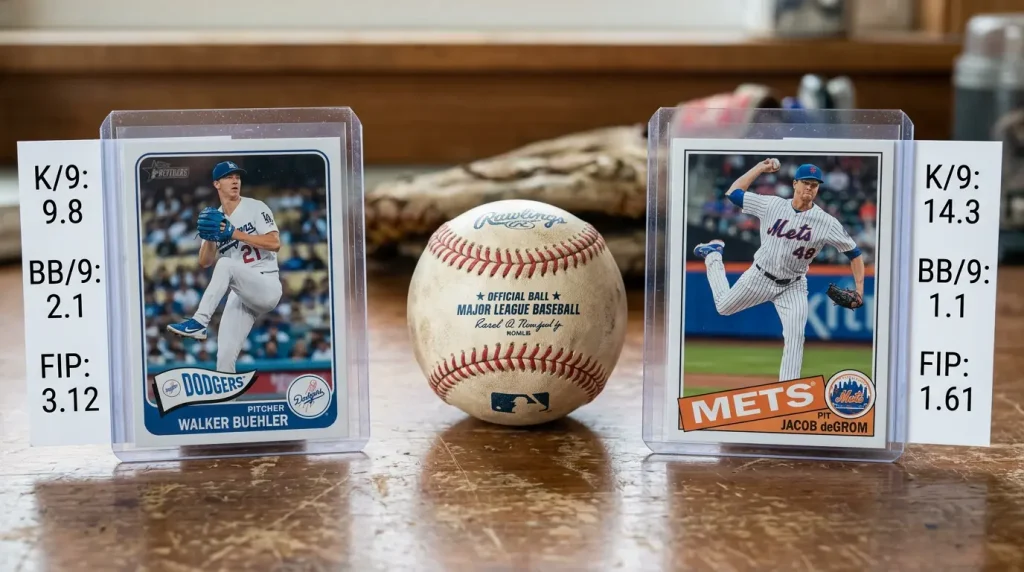
Identifying Value Through Pitching Splits and FIP Metrics
Show me a casual MLB fan and I will show you someone who underrates how much the starting pitcher matters. Show me a betting line on a regular-season game and I will show you a price that almost entirely reflects the two listed starters and almost nothing else. The lineup matters; the bullpen matters; the park matters. But the listed starting pitcher pair, on a typical regular-season night, accounts for the lion’s share of the line movement between when it opens and when it closes. A scratched starter twenty minutes before first pitch can move a moneyline by thirty to fifty cents in either direction, which is a magnitude the lineup announcement could never approach.
Crypto sportsbooks are sometimes slower than the sharpest fiat books at re-pricing around late-arriving starter information. The window between a Twitter announcement of a scratched starter and the line moving on a smaller crypto operator can be ten to fifteen minutes – long enough to act if you are watching, gone if you are not. Across a 162-game season per team and 2,430 fixtures league-wide, the cumulative effect of being attentive to starter changes is meaningful. This piece is about the metrics that matter, the lineup-versus-pitcher data that actually predicts, and the late-scratch handling rules that decide whether your bet is on or off when something changes.
The four numbers I look at first
Strikeouts per nine innings – K/9 – is the headline metric for any starting pitcher and the single best predictor of how the pitcher’s outing will unfold. A K/9 above ten across the season indicates a pitcher who can dominate any lineup if his command is sharp; below seven indicates a pitcher whose path to success runs through batted-ball management rather than punchouts. The implications cascade through every market on the slip – moneyline, run line, totals, F5, props.
Walks per nine innings – BB/9 – is the second number. A pitcher with a high K/9 and a low BB/9 is in the top tier for any matchup; a pitcher with a high K/9 and a high BB/9 is volatile, with both his ceiling and his floor wider than the public assumes. The volatility creates value on alternate run lines on his team’s side: if he pitches well, his strikeout output supports a low run line; if he pitches poorly, the walks compound into the bullpen exposure that pushes totals over.
Home runs allowed per nine innings – HR/9 – is the third. Even a high-strikeout pitcher with a low BB/9 can have an inflated HR/9 if his pitch profile is fly-ball heavy and his park plays small. This is the metric that most directly affects total runs and home run prop pricing on the opposing lineup. It also moves the under-priced bullpen exposure question – a pitcher with a high HR/9 generates more “long innings” where his pitch count climbs and the manager pulls him earlier than expected.
FIP – Fielding Independent Pitching – and SIERA are the bonus advanced metrics that pull these together into a single per-nine-innings number, with the noise of defence and batted-ball luck stripped out. FIP is a useful sanity check on ERA. SIERA is similar but accounts for ground-ball rate as well. A pitcher whose FIP and SIERA both suggest he should be performing better than his actual ERA is the canonical underpriced moneyline candidate; the reverse is the canonical regression candidate.
Lineup against pitcher: where the noise hides
The “career numbers against this pitcher” stat that broadcasts love is mostly noise. A hitter facing a specific pitcher fifteen times in their career produces a sample too small to draw any conclusion from, and the observed batting average is dominated by sequencing variance rather than skill. The exception, and it is a real exception, is the platoon split.
A right-handed lineup facing a left-handed pitcher, or the reverse, is the simplest meaningful split in baseball. Across a hundred or more at-bats – a sample most lineups have against most pitchers in their league – the platoon advantage produces a stable difference of around forty to fifty points of OPS in the favoured direction. That is enough to be material for a moneyline prediction.
The other lineup-versus-pitcher signal that matters is the third-time-through-the-order penalty. Pitchers’ performance degrades in their third trip through the lineup. A lineup that batters their starter through the order quickly – high pitches per plate appearance, working long counts – pushes the starter into that third trip earlier and exposes the team to the secondary effect. The data is on FanGraphs and Baseball Savant.
What does not generally produce edge is the long tail of “splits”. A specific hitter’s career against a specific pitcher across small samples; “day game versus night game” splits for a particular pitcher; “after a road trip” splits for a lineup. These are publicly available and irresistible to write about, but the samples are too small and the public model has either already absorbed them or noticed they do not predict.
The late-scratch handling that decides whether your bet survives
Most crypto sportsbooks operate under a “listed pitchers” rule by default. The bet is conditional on both starting pitchers actually starting the game. If either pitcher is scratched before first pitch, the moneyline and run line markets either void or re-price, depending on operator-specific rules. The standard approach is that the bet voids if either starter does not throw to at least one batter; some operators have a more permissive rule where the bet only voids if the scratched pitcher does not start the game at all, regardless of how few pitches they throw.
Player props on the scratched starter typically void in all cases. Player props on opposing players are more complicated – some operators void them as well because the change in pitching matchup invalidates the prop’s premise; others let them stand because the opposing player still appeared in the game.
The other variant is that some operators apply a “bet stands regardless” rule – also called “action” – by default. In this case, the bet is on the team and not the pitcher, so a scratched starter does not void. This is more common at offshore books that are pulling action without the listed-pitchers contractual structure that has historically dominated US-facing books.
The practical implication is that you must read the rules tab on the bet slip before placing during a window where a scratch is plausible. The same nominal moneyline at two different operators with two different scratch rules is materially a different bet – one of them is conditional on the listed pitcher, the other is unconditional. The difference is most material in late-game scratches, where one operator voids and refunds while the other keeps the bet alive at the price you took.
How I actually build a starting-pitcher-driven bet
The pre-game routine I run is sequential and short. First, K/9, BB/9, HR/9, FIP, SIERA across the season-to-date for both starters, drawn from FanGraphs in a single tab. Second, the opposing lineup’s platoon split against the starter’s handedness, drawn from FanGraphs in a second tab. Third, the bullpen state for both teams, drawn from team-specific reporting in a third tab – who is unavailable, who threw on consecutive days. Fourth, the park-and-weather context for the fixture.
The output is a fair-value moneyline that I compute mentally for the underdog side. If the operator’s price on the underdog is above my fair-value implied probability by enough to overcome the hold, that is a play. The most common pattern is a starter with strong underlying metrics – high K/9, low BB/9, FIP below the season ERA – facing a lineup whose platoon split is in his favour, where the public has anchored on the actual ERA rather than the underlying performance. The line on his team’s side is regularly available a few cents below where it should be.
Linking starting pitcher analysis to F5 markets – first five innings – is the natural pairing. The first five innings isolate the starter’s contribution from the bullpen’s, which is exactly the layer the analysis above is sharpest on. An F5 moneyline or F5 run line on a starter whose underlying metrics support a tight game is one of the cleaner bet shapes in the slate.
Pitcher analysis runs straight into strikeout prop pricing – the same metrics drive both – and my piece on MLB strikeout props at crypto baseball sportsbooks covers the prop side from the same starting point.
Articles



Created by the "BlockPlate" editorial team.
