
Anonymous No-KYC Crypto Sportsbooks for Baseball
 Available in US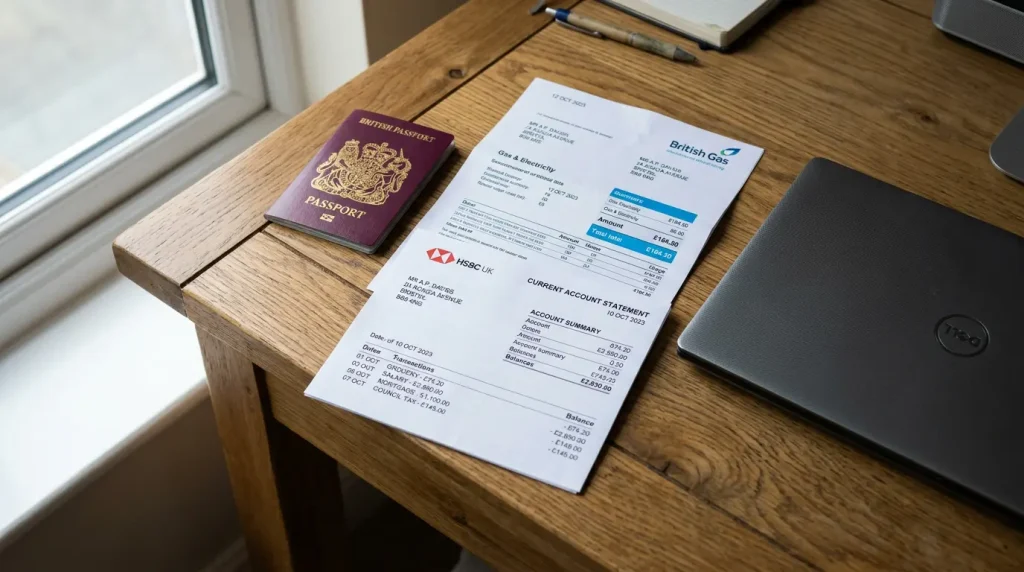
Navigating Withdrawal Limits and KYC Triggers for UK Players
Type “no-KYC crypto sportsbook” into a search engine and you get pages of operators promising frictionless wagering with no documents required. Read the small print on any one of those operators and you find a different story. The “no-KYC” claim is almost always shorthand for “no-KYC under specific conditions” and the conditions are exactly the ones that arrive on the day a bettor most wants to withdraw – a winning streak, a large balance, a payout that crosses an internal AML threshold. The claim is technically true on the deposit side and on small early withdrawals; it dissolves on the side that matters.
This piece is for the UK bettor who has been considering a no-KYC operator for an MLB account. The angle is practical, not moralistic. There are reasons to value privacy on the input side. There are also reasons to be realistic about how the output side works in practice. The UK Gambling Commission has been blunt about the integrity costs of unlicensed operators – one of its public statements pointed out that there is nothing more exploitative than the illegal market, and that disrupting illegal gambling upstream has been a focus precisely because the consumer protections that licensed operators are required to provide are not being provided in the grey zone. That framing is not idle. The “no-KYC” promise sits squarely in that grey zone.
What actually triggers verification
The triggers are dull and the triggers are predictable. Knowing them is most of the game. The single most reliable trigger is withdrawal size. Operators have internal AML thresholds – typically expressed in the operator’s reserve currency – above which a withdrawal automatically routes to a verification queue. Common thresholds sit around two to three thousand dollars equivalent for a single withdrawal and around five to ten thousand dollars equivalent in cumulative withdrawals over a thirty-day window. Below those thresholds, a clean account can route through automatically. Above them, the verification request is mechanical, not a discretionary judgement of the operator.
The second trigger is frequency. A pattern of small withdrawals each just below the per-withdrawal threshold is the classic “structuring” signature in AML monitoring, and crypto sportsbooks watch for it for the same reason any regulated financial institution does. A handful of small withdrawals in a quiet evening is fine. A regular cadence of withdrawals all at the same just-under-threshold size, repeated over weeks, will route to manual review.
The third trigger is wallet history. Operators run on-chain analytics on the deposit and withdrawal addresses used by their customers, and a wallet that touches mixers, sanctioned addresses, or high-risk jurisdictions will get flagged. Chinese-language money laundering networks alone processed sixteen point one billion dollars in 2025 – roughly forty-four million dollars per day – with gambling services explicitly used to fragment large transactions. Sportsbooks know this and the pattern detection is sharper than the marketing pages suggest. A wallet whose recent history includes any of those signals will not pass through a clean automatic flow regardless of what the headline policy says.
The fourth trigger is geographic mismatch. An account registered with one IP location, accessed from another, funded from a wallet associated with a third – that combination is unusual enough to attract attention. Most crypto sportsbooks run a passive geographic check at login and an active one at withdrawal. A UK bettor accessing from London, on a wallet whose history is consistent with UK CEX activity, will trigger the fewest of these checks. Anyone running through a VPN is creating their own friction.
Sixty-three per cent of all illegal cryptocurrency volume in 2024 happened in stablecoins. That single fact informs how much extra scrutiny large stablecoin withdrawals attract relative to BTC withdrawals of equivalent value. It is not personal. It is the model.
What the documentation request actually looks like
The standard document set, when verification is requested, is consistent across the larger crypto operators. A government-issued photo ID – passport or driving licence – is the first item. Proof of address from within the last three months – utility bill, bank statement, council tax letter – is the second. Proof of source of funds for high-value reviews is the third, and this is where operators differ in how rigorous they are: a bank statement showing the GBP outflow used to purchase the deposited crypto, a CEX transaction history showing the buy and the transfer, a payslip showing income consistent with the deposit pattern. Some operators ask for one of these; some ask for all three.
The request is usually delivered by email or an in-account message and the operator gives a window – typically seventy-two hours to a few weeks, depending on the size of the held funds – to provide the documents. Funds are generally held during the review. The review itself can take anything from same-day to a couple of weeks, depending on operator volume and the complexity of the case.
The documents themselves are straightforward to assemble for any UK bettor whose crypto activity has been routed through a centralised UK exchange. The CEX history is one click; the bank statement is one PDF download; the photo ID is sitting in your wallet. Where the friction arises is for bettors who have come into crypto through informal channels – peer-to-peer trades, mixers, or untraceable inflows – where the source-of-funds question genuinely cannot be answered with conventional documentation. The lesson there is not how to game the system but how to set up the upstream so the request is trivial when it arrives.
What can go wrong if you refuse the request
The contractual position at most crypto sportsbooks is that the operator can hold or void funds indefinitely if the customer fails to satisfy verification. The dispute remedies for an unverified customer at an offshore book are practically thin. If a payment processor or sportsbook decides the documentation is insufficient, the customer’s options are limited to public dispute on forums, escalation through the operator’s stated complaints channel, and patience. There is no UK-licensed body to appeal to because the operator was not UK-licensed in the first place.
I have personally never had a withdrawal frozen, but I have read enough forum threads to know that the bettors who run into trouble are mostly the ones who tried to skip verification by spreading withdrawals or by using wallet hops to obscure history. The clean-flow approach – depositing and withdrawing through the same UK CEX address, with documentation ready in advance – has been reliably uneventful in my experience.
The position I actually run
The pragmatic position is to assume that verification will happen at some point, and to set the upstream up so that when it does, the request is a fifteen-minute exercise rather than a fortnight of scrambling. Three habits make the difference. Fund the sportsbook from the same UK CEX address each time so the wallet history is consistent and well-documented. Avoid mixers and unfamiliar peer-to-peer counterparties for any wallet that will touch the sportsbook. Keep a folder of the relevant documents – passport scan, recent bank statement, CEX history CSV – current and ready, so when the request arrives the response time is minutes, not days. The “no-KYC” framing is best read as “no-KYC under some conditions, prepare anyway”.
The verification question sits inside the larger UK regulatory picture – UKGC, FCA, HMRC, AML – which I cover in the broader walkthrough on UK crypto gambling regulation for baseball bettors.
Articles



Created by the "BlockPlate" editorial team.
