
HMRC Tax Rules for UK Crypto Baseball Winnings
 Available in US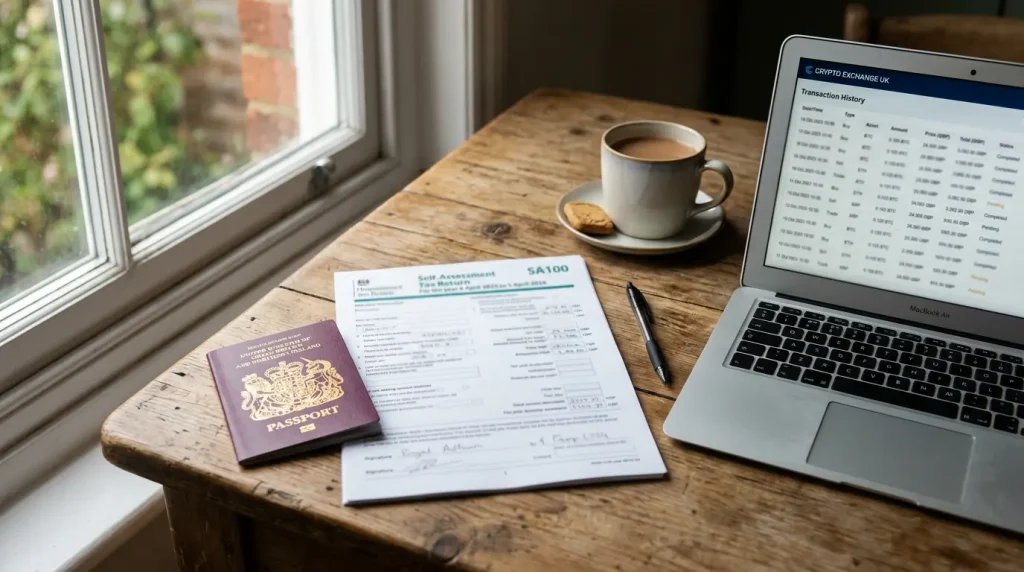
Managing Capital Gains Tax and Cost Basis for Bets
The UK is unusual among major jurisdictions in that gambling winnings for individuals are not taxable. A friend of mine who has been backing horses for forty years has never declared a penny of betting income because there is no penny of betting income to declare under HMRC’s framework. The same headline rule applies to crypto MLB betting. The act of placing the bet, winning the bet, and receiving the proceeds does not by itself create a taxable event for the bettor.
The catch – and it is a substantial catch – is that the cryptocurrency wrapping the bet is not exempt. HMRC treats crypto as an asset for capital gains purposes, and any disposal of that asset is a CGT event. The chain of transactions that takes a UK bettor from sterling at a high street bank, through a centralised exchange, to a sportsbook balance, and back again, contains multiple disposals along the way. The betting itself is not taxed. The crypto plumbing around the betting is taxed at every step.
This piece walks through how that distinction actually works in practice. It is general information rather than tax advice; my own approach has been to keep clean records and run the position past an accountant once a year, and I would recommend the same to anyone in this hobby with non-trivial volume. Around three-quarters of UK crypto holders sit in the sixteen-to-forty-four age bracket, and HMRC has been publicly working on its impact assessment for domestic CARF reporting precisely because that demographic is large and growing. The relevant UKGC commentary on the broader trend has flagged that the demographic shift toward crypto among younger users is creating a regulatory pressure point. Tax administration is the part of that pressure point most likely to land on the bettor.
Why the bet itself is not taxable
The legal foundation is straightforward. Under the gambling legislation that has applied in the United Kingdom since 2001, betting winnings for individuals are not income. They are not subject to income tax, they are not subject to capital gains tax in their character as gambling proceeds, and they do not need to be declared on a self-assessment return as gambling income. The duty paid on betting in the UK is paid by the operator through the General Betting Duty regime, not by the customer. From the customer’s perspective, the win is silent for tax purposes in its own right.
This applies whether the bet is in fiat or in crypto. A wager placed in BTC, won, and credited back to the bettor’s account in BTC has produced gambling proceeds, and those proceeds are not income. Where an operator credits the win in the same currency in which the bet was placed, no FX disposal has happened on the operator’s side and no taxable event arises from the act of winning.
Why the crypto disposal is taxable anyway
The taxable layer sits on the chain of transactions around the bet. Each of the following is a disposal of a crypto asset under UK CGT rules. Buying BTC for GBP on a centralised exchange – that is an acquisition of BTC, not a disposal in itself, but the cost basis is set at the GBP value at the moment of purchase. Sending BTC from the exchange to the sportsbook – depending on the analyst, this is or is not a disposal; HMRC’s published view treats transfers between wallets owned by the same person as not disposals, but a transfer to a custodial sportsbook account is technically a transfer of beneficial control to the operator and a disposal in the strict reading. Most accountants treat this transfer as not a disposal in practice. Receiving BTC back from the sportsbook into your wallet – the inverse of the above. Converting BTC to USDT inside the sportsbook or back at the exchange – a disposal under any reading. Selling BTC or USDT for GBP – unambiguously a disposal.
The cost basis methodology is the same as for any other UK crypto holder. Acquisitions of the same coin pool together under the section 104 averaging rule. When you dispose of a portion of your holding, you compute the cost as the average per-coin cost across your aggregated pool, multiplied by the units disposed. Same-day acquisitions and “bed and breakfast” rules apply. The effect, for an active bettor running BTC in and out of a sportsbook, is that the cost basis of the BTC you withdraw is not the GBP price on the day you bought it; it is the average price across all the BTC sitting in your section-104 pool at the moment of disposal.
The annual CGT exemption – three thousand pounds for the 2024-25 and 2025-26 tax years – covers a non-trivial slice of casual gains. Disposals up to the annual exemption are within the allowance and do not require self-assessment reporting. Above it, the disposals need to be reported and CGT paid on the gain, at the relevant CGT rate.
Record-keeping that survives a self-assessment
The minimum record set is unambiguous: for each transaction, the date and time, the type of transaction (buy, sell, swap, transfer), the asset and quantity, the GBP value at the moment of the transaction, the counterparty (CEX, sportsbook, wallet), and the transaction ID. That is what is needed to reconstruct the cost basis and the disposal calculations at year end.
The two practical ways to maintain that record set are spreadsheet and software. Spreadsheet works for a bettor whose volume is modest – a handful of deposits and withdrawals per month, a single sportsbook, a single exchange. The columns are the columns above and the GBP value is taken from the exchange’s transaction record at the moment of the trade. Once the volume goes above a few hundred transactions a year, the spreadsheet approach becomes brittle, and dedicated tools – Koinly, CoinTracker, Recap and similar – handle the section-104 pooling and the per-disposal calculations more reliably.
The transaction IDs matter. HMRC has been signposting that with the CARF reporting regime coming online, UK exchanges will be reporting customer activity to HMRC on a much more granular basis than they have historically. The corollary is that the bettor’s own records need to match the exchange’s records line for line, because mismatches will become visible at the audit margin in a way they were not before. Around eight per cent of UK adults – roughly four and a half million people – held cryptoassets in 2025, and the regulatory infrastructure is being built to make that population reportable.
Where the report actually goes
Self-assessment is the channel for individual CGT reporting. The crypto-specific section of the SA108 schedule is where the disposals and gains are summarised. The deadlines are the standard ones – paper returns by the end of October following the tax year, online returns by the end of January.
The CARF – Cryptoasset Reporting Framework – is a separate regime imposed on the exchanges, not on the individual. From the bettor’s perspective, the practical change is that the data the exchange holds about your activity will be available to HMRC by default, not just on request. That changes the audit risk profile but does not change what you owe. What you owe is determined by the rules above. CARF just makes it harder for either side to be ignorant of what the rules say happened.
If your crypto baseball activity in a given tax year results in losses – disposals where the GBP value at exit was below the GBP value at acquisition – those losses are deductible against other CGT gains in the same year, and unused losses can be carried forward to future years. This is the one piece of good news in an otherwise paperwork-heavy regime. The losses reported in year one may offset gains earned in year two, which for a bettor who experiences both crypto-wins and crypto-losses inside the same wrapper is occasionally meaningful.
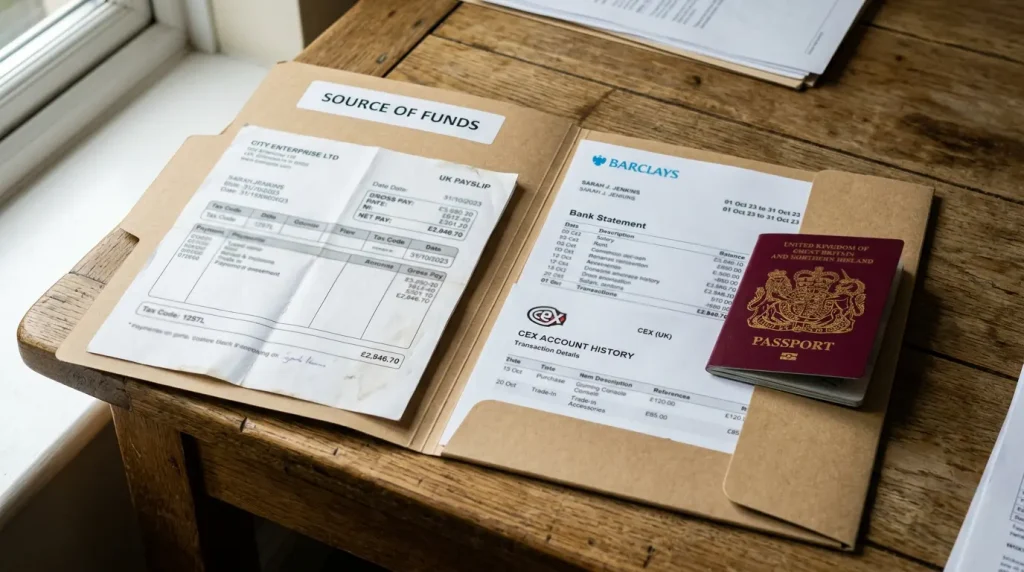
The tax layer interacts with the AML and source-of-funds layer when withdrawals get routed through verification – the same documentation that satisfies the operator’s review is the documentation that backstops the self-assessment record set. I have written that interaction up in my piece on source of funds and AML for UK crypto baseball bettors.
Articles
Published by the BlockPlate team.
