
World Series Futures Markets for Crypto Bettors
 Available in US
Managing Long-Term Crypto Positions on Championship Bets
I once held a futures ticket on a National League club for 197 days. The bet was placed on the second day of spring training, the team made the World Series, lost in five, and my ticket settled the morning after Game 5. Two hundred days of wallet exposure, two hundred days of one team’s roster turnover and trade-deadline drama, two hundred days during which the price of Bitcoin moved by more than the price of the actual sports bet. World Series futures are the longest single position a baseball bettor will hold during the year, and on a crypto sportsbook that length introduces a second, simultaneous bet that nobody asked for: a bet on the underlying coin.
The British appetite for these tickets has grown with everything else MLB-shaped here. Chris Marinak, who runs operations and strategy for the league, has been explicit that the United Kingdom is a priority market and an area MLB plans to emphasise for international growth – the corollary for a bettor is that liquidity on UK-friendly crypto books for World Series futures has visibly improved over the past two seasons.
This piece is about how to think clearly about that double exposure. What the hold actually looks like on a futures market versus a moneyline market, when in the calendar year to take a position, why the choice between Bitcoin and a stablecoin matters more here than on any other baseball wager, and how to use playoff hedging when your futures ticket reaches the postseason in the green.
The hold is the first thing to understand
If you have read my piece on sportsbook hold or have seen the maths anywhere else, the punchline is that hold on MLB moneyline markets is typically four to six per cent, hold on run line and totals is similar, and hold on player props ranges from seven to fifteen. Season-long futures are an entirely different category. The standard hold on World Series futures markets, summed across all thirty teams, runs anywhere from twenty-five to thirty-five per cent. Some smaller crypto books push it higher.
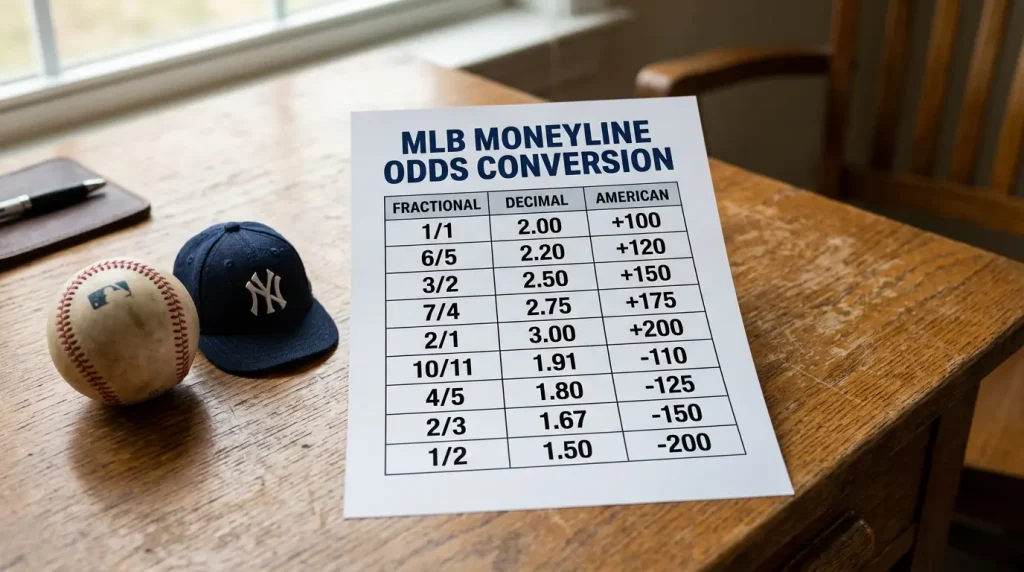
What that means in practice is that even if you correctly identify the team most likely to win the World Series, the price the operator is offering you has been deliberately built to overstate the implied probability of the outcome. A team that is genuinely fifteen per cent to win the championship might be priced at plus-five-hundred – implied probability roughly seventeen per cent – at a sharp book and at plus-four-hundred – twenty per cent – at a fattier book. That difference is the entire game on a long-dated futures position.
The first thing I do when I look at a futures market on a crypto sportsbook is compute the overround. Add the inverse of the decimal odds for every team, then subtract one. If the result is twenty-five per cent or below, the market is competitively priced for the segment. If it is thirty-five per cent or above, you are paying a premium. There is no edge available at certain operators because the hold is too thick to overcome. Walk away.
When in the calendar to actually place
Spring-training prices are fattest because the operator has the least information and the most uncertainty. Some of those prices are gifts; some are traps. The gifts are teams whose offseason additions are underrated by the public – a frontline starter signed in late January, a power hitter acquired in a trade that the casual market did not absorb. The traps are teams whose offseason hype outruns their actual roster construction. The work is the same: build a forecast that is independent of what the line is telling you, then compare.
The window I personally favour is the second or third week of spring training. By that point the obvious lineup decisions have been made, the early injury picture is clearer than on day one, and the operator’s pricing has had a chance to absorb post-arbitration roster moves. Lines often soften slightly in early spring training as the trading desk re-prices around new information, and the soft windows are where the entry is.
The second meaningful entry point is the trade deadline at the end of July. Contenders who buy aggressively get re-priced; sellers who give up rotation pieces drop. Within forty-eight hours of major moves, the futures market re-equilibrates, and during that re-pricing window there are sometimes mismatches between the public reaction and the actual marginal change in playoff probability. That is when value tends to appear on the buy-side teams.
The window I avoid is the September push. By then, the field has almost narrowed itself, the lines are tight, the public money is concentrated, and the hold is being efficiently extracted from late-arriving punters who have just realised their team is in the race. There is occasional value on a wild-card hopeful in early September if you have a strong view on a specific matchup, but the slate-wide opportunity has typically already gone.
Bitcoin or a stablecoin: the lock-in question
This is the question that distinguishes futures betting on a crypto book from any other form of crypto wagering. A moneyline bet held for three hours has roughly no FX risk. A futures bet held for six months has a meaningful one. Bitcoin moves twenty per cent in a quiet month and forty per cent in a volatile one. The actual sports return on your futures bet – say, plus-eight-hundred on a championship – can be wiped out by a thirty per cent decline in the underlying coin during the holding period. The reverse is also true. You can be wrong on the sport and still be in the green if Bitcoin runs.
Bitcoin makes up roughly seventy-seven per cent of all crypto sportsbook handle and the entire crypto sportsbook segment processed around fourteen billion dollars of bets in 2025. That dominance means BTC is the path of least resistance on most operators, and the deepest liquidity. For a one-night moneyline play, BTC is fine. For a futures bet held to October, BTC is two bets in one.
Stablecoins solve the FX problem and create a different one. Sixty-three per cent of all illegal cryptocurrency transactions in 2024 happened in stablecoins, and that statistic is the reason large stablecoin withdrawals from crypto sportsbooks attract heightened AML attention. A futures ticket that pays out a five-figure stablecoin sum in October is exactly the kind of transaction that triggers source-of-funds review at the operator and at any centralised exchange you withdraw to. The lock-in is clean; the exit may not be.
My pragmatic compromise: futures bets that I expect to settle in the low hundreds or low thousands of dollars equivalent get placed in a stablecoin. Futures bets that I expect to be much larger, where the AML attention is going to land regardless, get placed in BTC because the liquidity and the limit are better. Sub-thousand-dollar tickets in stablecoins clear the smaller operators without much trouble; large stablecoin payouts attract noticeably more friction than the equivalent BTC withdrawal. The cost of crypto FX exposure is real, but for the largest tickets it can be the lesser problem.
Hedging once you reach the playoffs
If your futures ticket survives to October, you have a real position to manage. The standard hedge is to take the opposing side at the moneyline level – your team is in the World Series, you bet the other team to win on each game in the series. The maths is straightforward: figure out how much your ticket pays if your team wins it all, figure out the moneyline price on the opposing team to win the series, and stake enough on the hedge that you lock in a guaranteed return regardless of outcome. The hedge can be partial – split the difference between locking in a sure thing and keeping some upside – or full.
The thing nobody warns you about is that if your futures was placed in Bitcoin and your hedge is placed in Bitcoin, the FX risk is the same on both sides and the hedge is genuinely a sport hedge. If your futures was in BTC and you place the hedge in stablecoin, you are now hedging the sport and unhedging the FX exposure simultaneously. Stay consistent in coin choice across the futures and the hedge unless you are deliberately doing both at once.
Choosing the right coin for a futures ticket is the same question, with higher stakes, that you face on every wager – my full breakdown of that decision is in the piece on the best cryptocurrency for MLB betting.
Articles

Published by the BlockPlate team.
