
Top Cryptocurrencies for MLB Sportsbooks
 Available in US
Comparing BTC and Stablecoins for Baseball Odds
The question I get most often from people starting to bet baseball with crypto is “which coin is best?” — and it is the wrong question, because there is no single best coin. There is a coin that is best for a specific bet, on a specific operator, with a specific holding period, at a specific moment in the market. Get those four variables wrong and you can pay a 4% spread on the entry, watch the asset move 3% against you while the bet sits open, and find out at withdrawal that the network you chose does not let you cash out below a minimum that exceeds your balance. None of that has anything to do with the bet itself.
What you actually need is a framework. Three axes drive the decision: volatility (does the asset move while your wager is open?), speed (how fast does it settle from CEX to wallet to sportsbook to back?), and cost (what does each leg actually take in fees and slippage?). Bitcoin scores well on liquidity and acceptance, badly on volatility. Stablecoins reverse that profile. Lightning solves speed at small sizes. Ethereum and its layer-2 ecosystem sit in an awkward middle. The “right” choice is whichever of those scoring profiles fits the bet you are about to place.
This article walks through each of the major coins in the order I evaluate them when sizing a bet, and ends with the working defaults I keep falling back to after several years of doing this from the UK. None of those defaults is a recommendation. They are a worked example of how the framework collapses, in a particular bettor’s hands, into a particular set of habits.
What the volume numbers actually say about coin choice
Crypto sportsbooks processed about $14 billion in betting volume in 2025, and Bitcoin accounted for 77% of that. The remaining 23% was spread across stablecoins, Ethereum, and a handful of smaller assets. Those numbers are dominance figures, not endorsements — they tell you what the market did, not what was optimal. But they do tell you something about acceptance: any operator that takes crypto at all takes Bitcoin, and the tail of supported coins narrows fast as you move down the volume distribution.
The Cloudbet trading data from Q1 2026 illustrates the point on the volume side. The platform reported almost double the volume year-on-year on basketball, with similar growth across its 40+ supported sports. A Cloudbet spokesperson, framing the breakdown by sport rather than by coin, put it like this: “Nobody is surprised that basketball, soccer and tennis top the list — but the way they top it tells you something interesting about how crypto bettors actually behave. Soccer draws more individual bets than any other sport on our site, but basketball ranks higher when you measure by the total money placed.” The comment is about sports, not coins, but it speaks to the same dynamic — the headline volume numbers and the per-bet-size numbers tell different stories. A coin can dominate total volume because of a few large bettors, while another coin sees more individual bets because it suits smaller, more frequent positions.
For the average UK player, what those numbers mean operationally is straightforward. BTC is universally accepted, has the deepest liquidity at every operator, and gets the smoothest treatment at every step from CEX purchase through sportsbook deposit through withdrawal back to fiat. Stablecoins are widely but not universally accepted; some smaller crypto sportsbooks list “stablecoin support” but only on a single network (typically ERC-20), which makes them costly in practice. Ethereum mainnet support is broad on the larger operators and patchy on the smaller ones. Layer-2 deployments and altcoins outside the top five are operator-specific. The closer your coin choice is to BTC at the top of the funnel, the fewer surprises you encounter at the bottom.
Bitcoin: the default that is not always right
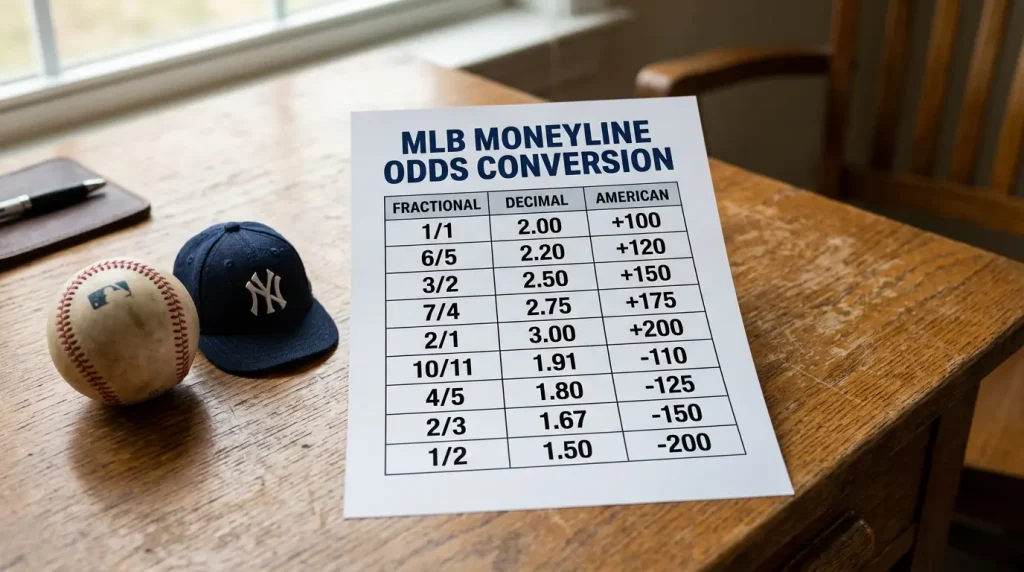
I default to Bitcoin for any bet over a few hundred pounds. The reasoning is simple — depth, acceptance, and limit profile. Sportsbooks tend to publish their highest stake limits in BTC because that is where their trading book is most willing to absorb size. A Yankees moneyline that caps at 0.04 BTC also caps at maybe 1500 USDT (lower in dollar terms) at the same operator. If I am sizing the bet at the upper end of the limit, BTC is where the cap is widest.
The other thing Bitcoin gets right is settlement reliability. The base chain is slow, but it is slow predictably — 10 minutes per block, give or take, with one to three confirmations needed at most operators. The fee market spikes during congestion (peak periods can push transaction costs above $20 per transaction; quiet windows drop the same transaction to under $2), but the chain itself does not stop, and there is no equivalent of an Ethereum-style gas spike that makes the network briefly unusable. Lightning solves the speed problem for bets under, say, 0.01 BTC; the base chain is fine for larger amounts where the per-transaction cost is a small percentage of the bet itself.
Where Bitcoin falls down is volatility. If I place a bet at 9pm and it settles at 1am — six hours of market exposure — Bitcoin can move 2 to 5% in routine conditions and more in eventful ones. That movement is gain or loss on top of the bet itself, and on a winning bet it can either compound the win or partially erase it. The asymmetry matters because the bet’s expected value calculation does not include FX risk, but the actual profit-and-loss does. Over a season of routine MLB action, the BTC volatility either wash itself out or systematically moves with the wider crypto market — and you do not get to choose which.
The volatility problem also bites on the way in. If I plan to bet £200 and BTC has risen 4% in the hour before I deposit, I either send less BTC than I planned (now my bet sizing is off) or buy more BTC at the higher price (now I am chasing). Stablecoins do not have this problem. For a bettor who places frequent, smaller bets, the cumulative friction of BTC’s price movement is non-trivial, and that is the case for using a stablecoin as the working bankroll currency.
Stablecoins: the unvolatile choice with hidden compliance friction
USDT and USDC do not move against the dollar. That solves the volatility problem cleanly. A 100 USDT deposit on Monday is still worth 100 USDT on Friday, regardless of what BTC has done in the interim. For bettors whose mental model of bankroll is “I have £500 to bet this month”, a stablecoin balance lets the operational arithmetic match the mental model — you bet, you settle, you withdraw, you know what you have.
The network choice matters as much as the coin choice. USDT on Tron (TRC-20) is the standard cheap rail — transactions cost roughly 1 TRX, around $0.30 to $0.50 at typical TRX prices, and confirm in seconds. USDT on Ethereum (ERC-20) is the original implementation, with the highest acceptance but Ethereum-level gas fees that can push a transfer cost to $5 to $20 depending on network conditions. USDC has similar network options — Solana, Ethereum, Polygon — with Solana being the cheap rail equivalent of Tron-USDT. BEP-20 (BNB Chain) variants exist and are cheap but have narrower sportsbook acceptance.
The hidden cost of stablecoins is at the AML layer. The Chainalysis 2025 Crypto Crime Trends data reports that stablecoins accounted for 63% of all illicit crypto transactions in 2024, with the total illicit volume estimated at $40 billion (revised projections push it toward $51 billion). Sportsbook compliance teams know that number, and it shapes how they treat stablecoin withdrawals — particularly large ones to fresh wallets, particularly USDT on Tron, particularly to wallet addresses with on-chain history involving mixers or known high-risk services. The KYC threshold on a stablecoin withdrawal is, in practice, often lower than the equivalent threshold on a BTC withdrawal at the same operator. That is not arbitrary. It is the operator’s risk model responding to the wider compliance environment.
The other operational point is that stablecoin deposits and withdrawals require the right “memo” or “destination tag” on certain networks — particularly when the sportsbook uses a shared deposit address. A USDT-Tron deposit without the correct memo will arrive at the operator and require a manual reconciliation that can take days. I have made this mistake. Once. The recovery process took eight days and three rounds of email with support. Read the deposit instructions in full before sending. The full BTC-versus-stablecoin trade-off — including how to think about volatility risk on long-running futures bets — is worked through in detail in my guide on stablecoin versus Bitcoin for MLB betting and managing volatility.
Ethereum and the layer-2 question
Ethereum is the third coin most crypto sportsbooks accept, and the second most actively used after Bitcoin. The case for ETH is real — large liquid market, smart-contract infrastructure that some operators leverage for on-chain settlement features, broad CEX support. The case against ETH for routine baseball betting is gas. Ethereum mainnet transaction costs swing wildly with network demand. A weekday-quiet ETH transfer might cost $2 to $5; a busy market hour pushes the same transfer to $15 to $30, and a spike during an NFT mint or a DeFi event can blow it past $50. That cost is layered onto every deposit and every withdrawal, and at the £50-to-£500 stake range it is meaningful as a percentage of the bet.
Layer 2 networks (Arbitrum, Optimism, Base, zkSync) solve the gas problem on the Ethereum side, with transaction costs typically a few cents and settlement in seconds. The barrier is operator support. As of mid-2026, layer-2 acceptance at crypto sportsbooks is still narrow — Arbitrum and Base have the broadest support of the L2s and are starting to appear at the larger operators, but it is far from universal, and the mainnet ETH option is still the default. Bridging between mainnet ETH and an L2 has its own cost (one mainnet transaction in each direction) and adds operational complexity that most casual bettors will not want.
The use case for ETH that genuinely makes sense is when the bettor is already using Ethereum for other purposes — DeFi positions, NFT activity, broader on-chain investing — and wants to keep the betting bankroll on the same chain to consolidate management. For a bettor coming in fresh whose only crypto activity is sportsbook-related, ETH is the third-best choice behind BTC and a stablecoin on a cheap network, and the gas overhead is the reason.
Lightning Network for the bettor who places small and often
Lightning Network is the BTC payments layer, designed for small, fast, off-chain transactions that settle to BTC on the underlying chain. From a bettor’s point of view it offers two genuinely useful properties: settlement under one minute (typical settlement is two to ten seconds) and per-transaction costs in the single-digit-pence range regardless of mainnet congestion. For someone who places a dozen bets a week at modest stake sizes, Lightning is the closest thing crypto offers to “instant deposit, instant withdrawal” without the underlying volatility of the asset itself.
The trade-off is acceptance. Lightning support at crypto sportsbooks has grown but is still selective. Operators with serious sports trading and an awareness of the Bitcoin community tend to support Lightning; pure-casino crypto operators often do not. Lightning withdrawal limits are usually capped lower than on-chain limits, which makes Lightning the right rail for routine in-and-out activity but the wrong rail for cashing out a large win. Channels — the underlying mechanism for Lightning payments — have liquidity constraints that occasionally cause “channel insufficient” errors at the sportsbook side, which can be solved by waiting a few minutes or routing through a different node, but is a real friction point for users new to the rail.
For an MLB bettor placing two or three bets a night across a typical week, Lightning is the rail that fits the activity profile most cleanly. The same bettor placing one or two large futures positions a month is better served by mainnet BTC or a stablecoin.
Other coins: where they fit and where they do not
The list of coins beyond BTC, ETH, USDT and USDC that sportsbooks accept is shorter than the marketing suggests. Litecoin (LTC) has long-standing acceptance and offers fast, cheap transfers — it is the dark horse of betting bankroll currencies, with confirmation times around 2.5 minutes per block and per-transaction costs measured in cents. Bitcoin Cash (BCH) has narrower support and tends to be carried more on legacy operators than newer ones. Tron (TRX) is the native asset of the Tron network and is accepted directly at some sportsbooks, though most users hold TRX only as the gas asset for moving USDT-Tron rather than as a primary betting currency.
Dogecoin (DOGE) is accepted at a handful of operators with a meme-friendly orientation. It is also volatile in a way that makes BTC look stable — DOGE has had 30%+ single-day moves on no fundamental news, which is fine for a speculative position but disastrous for a bankroll that needs to hold value across an open bet. I do not hold betting bankroll in DOGE. The price risk is too asymmetric against the use case.
The XRP, SOL and ADA tier shows up at large operators as a deposit option without much liquidity benefit — they work as on-ramp choices if that is the asset you happen to hold, but there is no reason to hold them specifically for sportsbook activity if BTC, ETH or a stablecoin is available.
The rule I apply to any coin outside the top four is simple: is the operator going to support it on both deposit and withdrawal, with acceptable limits and reasonable settlement time, on both ends? If the answer is “deposit yes, withdrawal only via swap to BTC”, that is a deposit-only coin and not suitable for a betting bankroll. The asymmetry will cost you on every withdrawal cycle.
Matching the coin to the bet
The framework that has worked for me, after enough mistakes to populate a small textbook, is to match the coin to the bet’s holding period and stake size. The decision tree is simple enough to memorise.
For a long-running futures position — a World Series ticket bought in March, a regular-season win-total bet held until October — a stablecoin is the obvious choice. Six months of asset volatility on top of the bet itself is six months of risk that has nothing to do with the wager. USDT on Tron or USDC on Solana keeps the bankroll value pinned to dollars across the holding period. The tighter compliance profile on stablecoin withdrawals is a non-issue when the cashout is months away and you can time it for a calm window.
For live in-play and short-window bets — half-inning markets, third-inning totals, bets placed within an hour of first pitch and settled within three or four hours — Lightning is the cleanest rail when the operator supports it. Settlement speed matters; volatility risk over a three-hour window is small. The fees are negligible, and there is no withdrawal scrutiny on Lightning amounts that fit within typical session activity.
For large single-game bets — a serious moneyline or run-line position where the operator’s stake limit is the binding constraint — BTC is usually the right answer. The trading desk has the deepest book in BTC, the cap is highest in BTC, and the volatility risk over a four-hour game window is small enough to live with.
For a working bankroll that you keep on the sportsbook between bets — not at-deposit, not at-withdraw, but the rolling balance you bet from across a week — a stablecoin makes the arithmetic match the intent. You bet £500 a week; you keep 500 USDT on the platform; you bet between 5% and 10% of that per game; you rebuild it as you win and reload it as you lose. The mental model and the operational reality stay aligned.
A mixed-coin bankroll across these use cases is more work than a single-coin bankroll but produces fewer compromises. Most experienced crypto bettors I know run BTC and a stablecoin in parallel — the BTC pile for big single-game bets and futures hedges, the stablecoin pile for live action and routine slate play. The friction is at the rebalance: shifting between the two when one runs low requires either a CEX swap (with spread) or an on-chain DEX swap (with slippage), and that cost is real. But it is far smaller than the cost of letting volatility eat 3% of a bankroll over a routine week.
Exchange fees and slippage at the on-ramp
The CEX side of the flow is where most UK bettors lose more than they realise. 73% of UK cryptoasset holders buy their crypto through a centralised exchange, and that is the rail every UK MLB bettor is using whether they think about it or not. CEX fees come in three layers: the trading fee (0.1% to 0.6% per trade depending on volume tier), the spread (the gap between bid and ask, which the CEX captures on every trade), and the withdrawal fee on moving the asset to your wallet (a flat fee that depends on the network).
The trading fee is the most visible and the smallest. The spread is invisible and often the largest of the three on retail-tier accounts — a 0.5% spread on a £200 BTC purchase is £1 lost before the trading fee even applies. The withdrawal fee depends on the asset and the network. On BTC mainnet, exchanges typically charge a fixed BTC withdrawal fee that was around 0.0002 BTC ($10 to $15) on the larger UK CEXes in mid-2026; on USDT-Tron, the same exchanges charged 1 USDT flat. Lightning withdrawals, where supported, are typically a few hundred satoshis (pence-level) flat.
Slippage matters at larger sizes. A £2,000 BTC purchase on a tight order book moves through multiple price levels and the average fill price ends up slightly worse than the displayed mid-price at the start of the order. The retail UK CEXes hide this through the “convert” UI, which quotes you a single price and absorbs the slippage internally — usually at a higher cost to you than the visible spread on the equivalent advanced-trading order. For any non-trivial buy, the advanced trading interface gives you better pricing than the retail “convert” button, even though it looks more intimidating.
The cost stack on a single bet — CEX trading fee, CEX spread, CEX withdrawal fee, sportsbook deposit fee (often zero), sportsbook withdrawal fee on cashout, CEX deposit fee on the way back, plus the sale spread and trading fee on the GBP conversion — typically lands at 1% to 2.5% of the bet’s gross value for a £100 to £500 wager. That is the cost of operating in this market. It is broadly competitive with the implied vig structure of UK fiat sportsbooks once you account for the duty pass-through coming in 2026, but it is not free, and any analysis of a bet’s expected value needs to include it.
The default I keep coming back to
If someone asked me to summarise the framework into a single working rule for a UK player just starting, I would put it like this: keep the working bankroll in USDT on Tron, hold a parallel position in BTC for the larger single-game bets and any futures you intend to keep open for less than three months, use Lightning where the operator supports it for live in-play action, and never hold material betting capital in a coin you would not be comfortable holding for non-betting reasons.
That rule is not optimal in any analytic sense — there are bets where ETH, LTC, or another asset would have been a better fit — but it is robust to the most common mistakes. It avoids volatility eating the bankroll on long holds. It avoids gas spikes eating small live bets. It keeps the limit profile flexible by maintaining a BTC position. It keeps compliance friction manageable by avoiding the most-flagged stablecoin patterns. It is the working default after several seasons of doing this. The framework matters more than the specific defaults; if your activity profile differs from mine, the defaults shift, but the three axes — volatility, speed, cost — are universal.
Recommend



Created by the "BlockPlate" editorial team.
