
Betting the MLB All-Star Game with Crypto
 Available in US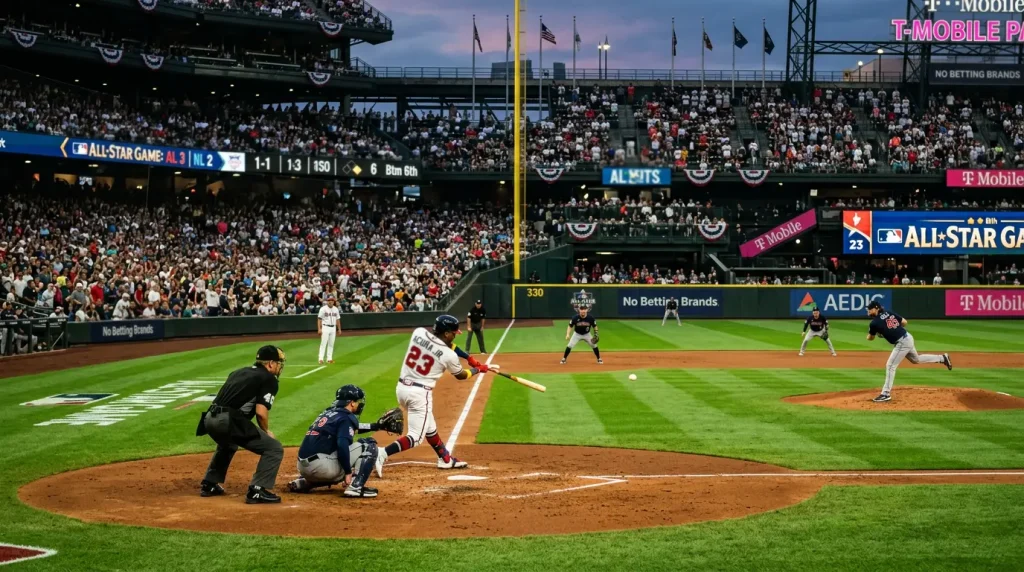
Pricing Exhibition Games and Home Run Derby Markets
For most of the season the betting market on a baseball game is a serious financial product, with sharp money pushing lines toward fair value and a competitive trading desk on the operator side adjusting in real time. For one night in mid-July, that whole structure relaxes. The All-Star Game is an exhibition, the players know it is an exhibition, the managers know it is an exhibition, and the markets know it is an exhibition. The game is interesting to watch and entertaining to bet on, but the analytical framework that produces edge during the regular season does not apply cleanly. This piece is about how to bet the All-Star Game without confusing it with a real game.
Cloudbet’s 2026 reporting on a platform covering more than forty sports and esports showed strong year-on-year baseball growth, and the All-Star Game is one of the high-profile exhibitions where the trading desks across the larger crypto operators put markets up well in advance – the run-up to the game is essentially an exercise in pricing entertainment value rather than competitive edge.
Format, rules, and what makes this game different
The American League and National League each select rosters from their players, with a mix of fan-vote starters, player-vote selections, and manager-pick reserves. The two squads play a single nine-inning game in mid-July at a host stadium, with the location rotating between AL and NL parks each year. The game has no playoff implications. Home-field advantage in the World Series is no longer determined by the All-Star result – that connection was severed in 2017 – and the game is now an exhibition with prize money, prestige, and television revenue but no postseason consequence.
The roster usage is the structural feature that breaks ordinary betting models. Managers rotate players aggressively. Starting pitchers throw one or two innings. Position players are substituted out by the fourth or fifth inning. The lineup that finishes the game has almost no overlap with the lineup that started. The bullpen is used by committee, with each league’s relievers each throwing fifteen to twenty pitches and being pulled regardless of game state.
The rules variations are minor but worth knowing. The designated hitter is in effect for both teams regardless of the host park. The All-Star Game has experimented with rule changes – some recent years have seen tie-breaker mechanisms after the ninth inning, including an “Atlantic League”-style automatic-runner-on-second extra innings format. The current rules for the upcoming All-Star Game should be confirmed in the operator’s bet-slip rules tab before placing.
The markets you will see on a crypto sportsbook
The standard bet menu for the All-Star Game runs lighter than a regular-season fixture. Moneyline on the AL versus the NL is the headline market, often priced very close to coin-flip – decimal 1.90 on each side or thereabouts – because the operator has no strong fundamental view. Run line at the standard one-and-a-half is available but not strongly traded. Total runs over/under is the more popular total market, with the line typically set in the seven-and-a-half to nine-and-a-half range to reflect the high-octane offensive nature of the exhibition.
Player prop markets are where the volume genuinely concentrates. Home run props at the All-Star Game are popular for the same reasons they are popular during the regular season – Cloudbet’s reporting and broader industry data flagged that the home-run prop is the most popular MLB market on the largest fiat operator, with around half of the operator’s MLB clients participating in home-run-themed promotions in 2025, and ninety-four players hitting twenty or more home runs across the regular season. The All-Star Game amplifies this. The lineup is concentrated power. The players are swinging from their heels. The probability of a home run from any given hitter is meaningfully higher than in a regular-season at-bat.
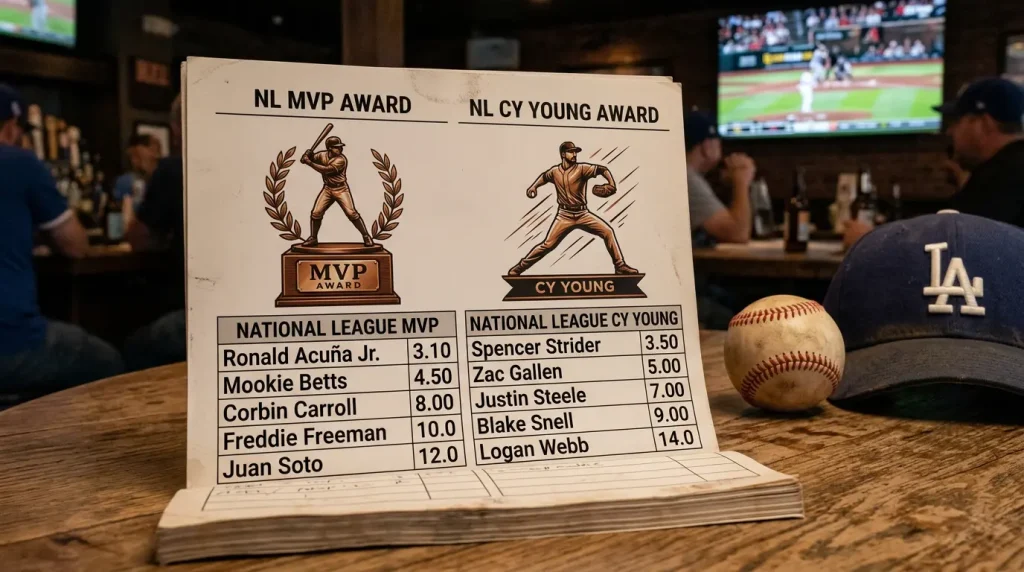
Hits and total bases props on the headlining offensive players are widely available. Pitcher strikeout props are limited because most pitchers throw too few innings to produce meaningful strikeout totals. MVP markets – first to be named All-Star Game MVP – are popular and priced widely across the participating players, with the favourite typically a marquee position player and the field meaningfully underpriced relative to a coin-flip distribution across the offensive starters.
Same-game parlay availability for the All-Star Game varies by operator. The largest crypto books offer SGP coverage on the standard prop markets; smaller crypto books often do not. Live betting on the game is widely available with the standard freeze and pricing windows, though the rapid roster turnover means in-game prices can move sharply with each substitution.
Why the game does not behave like a regular-season fixture
The model variables that drive regular-season MLB pricing – pitcher quality, lineup matchups, bullpen state, ballpark factors, weather – do not predict cleanly here. Pitcher quality is high but irrelevant because no pitcher throws long enough for his quality to dominate any individual segment of the game. Lineup matchups are a moot point because each lineup turns over after one or two at-bats per player. Bullpen state is uniform – every reliever is fresh, every reliever is throwing maximum effort. Park factors apply but at a lower amplitude because the lineup composition does not give either side a structural park advantage.
What drives outcomes instead is the random walk of contact, swing-and-miss, and umpire calls across a sample of nine innings between essentially evenly-matched rosters. The variance is high. The predictability is low. The operator’s headline price reflects this – the moneyline at coin-flip pricing is the operator’s honest acknowledgement that there is no strong fundamental edge available.
The exhibition framing also influences how players approach the game. Pitchers protect their season-relevant outings by throwing fewer max-effort pitches and avoiding injury-risk situations. Hitters approach plate appearances aggressively because they have no postseason protection to worry about. Defensive intensity is lower than in a regular game because the consequences of a defensive miscue are minimal. The result is a higher-scoring, faster-paced, more entertaining exhibition that is structurally different from any real game.
The bankroll discipline that fits the format
I size All-Star Game wagers at a quarter to a half of my standard MLB unit. The variance is high enough that even confident reads have only modest expected value, and the analytical edge available is structurally smaller than during the regular season. The bet shape that I find offers the best risk-reward is home run props on the marquee power hitters, sized small, treated as recreational rather than as core volume. The expected value comes from the probability of a home run from any given star at the All-Star Game being meaningfully higher than the implied probability the operator’s prop line suggests, with the house edge eaten by the structural over-pricing of the prop’s plus-money quote.
Moneyline plays I generally skip. The price is too close to fair value to find edge, and the high variance means even a confident sport read produces only marginally better than break-even expected value. Total runs are similarly tight. MVP markets occasionally have value on a specific star whose combination of likelihood-of-large-game and likelihood-of-being-named is underpriced relative to the operator’s quote, but the spread of the field across thirty potential candidates makes finding that value structurally difficult.
The discipline that matters most is bet-size discipline. The All-Star Game is an entertainment event, the volume of action on it is high, and the temptation to size up because the game feels special is real. Resisting that temptation is the single best decision I make on All-Star night. The wagers are small, the bet count is modest, and the cumulative expected value is positive but unspectacular. Anyone who has run a sustained crypto MLB account through several seasons learns to under-bet exhibitions, and over-bet is much harder to recover from than under-bet.
The All-Star Game is the high-water mark for MLB home run prop volume – even more concentrated than the regular-season Tuesday promotion that dominates that market – and my piece on MLB home run props with crypto covers the underlying market in full.
Articles
Published by the BlockPlate team.
