
MLB Postseason Betting at Crypto Sportsbooks
 Available in US
World Series and Playoff Liquidity at BlockPlate Bookies
The first MLB postseason I tried to apply my regular-season betting model to was a disaster. I had spent the season building rules around the way managers handle starting rotations, the cadence of bullpen usage, and the third-time-through-the-order penalty, and within three games of the playoffs I realised every single one of those assumptions had been violated by every team in the bracket. Aces were starting on three days’ rest. Closers were appearing in the seventh inning. Lineups were shortened. The model, which had performed well across 162 regular-season games, was now being asked to predict outcomes in a different sport played by the same athletes.
The 71.4 million-attendance regular season MLB produced in 2025 – the third year of growth in a row – funnels into a postseason of less than fifty games at most, played across three weeks in October and the first week of November. Every game has higher leverage than any single regular-season game, which means every game is approached differently by the team. The bookmakers know this. The bettors who profited in the regular season do not always profit in the postseason. This piece is about why and what to do about it.
The bracket structure and the prices that match each round
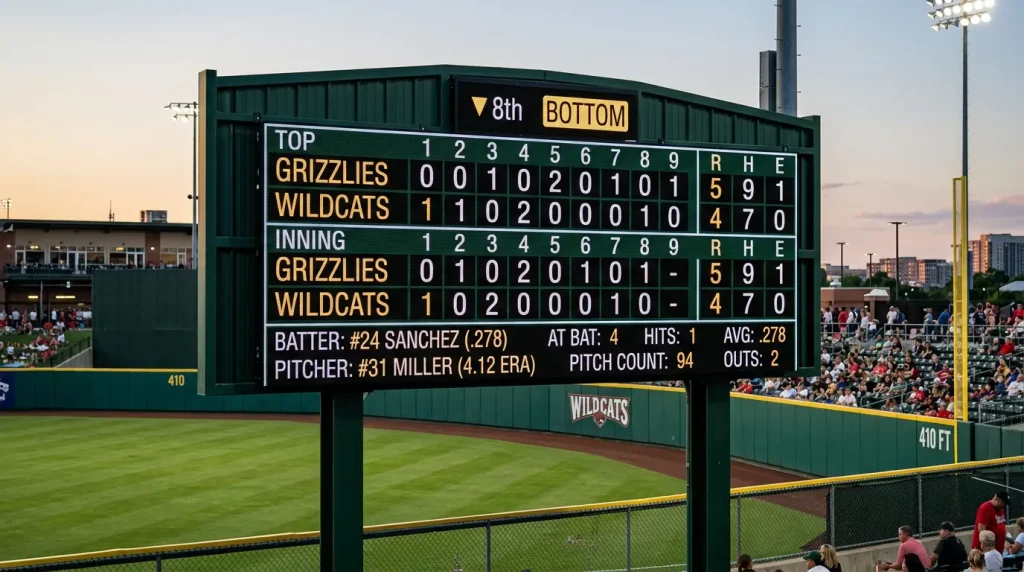
The MLB postseason runs through four rounds for a championship-winning team. The Wild Card Series is best-of-three, played in three days at the higher seed’s park. The Division Series – ALDS and NLDS – is best-of-five with two games at the higher seed, two at the lower seed, and a deciding fifth back at the higher seed if needed. The League Championship Series – ALCS and NLCS – is best-of-seven with the same higher-seed home advantage pattern. The World Series is best-of-seven with home-field determined by overall regular-season record.
Each round has its own market structure on a crypto sportsbook. Series prices are available at the start of each round – money on a team to win the Wild Card Series, the ALDS, and so on – and these prices update with each game. Game prices are available before each individual fixture and behave like regular-season game prices except for the postseason context that influences pitching and bullpen usage.
Series exact-result markets – the team to win in three games, in four games, in five games – are available at the larger crypto operators and absent at smaller ones. The hold on series exact-result markets is significantly higher than on the basic series winner because the operator has more places to embed margin across the spread of possible outcomes. I treat exact-result markets as recreational bets, not as core value plays.
Future markets that opened earlier in the year – World Series winner, league pennant winners, division winners – continue to settle through the postseason. A pre-season World Series futures ticket on a team that has reached the postseason is now an active position with cash-out options at the largest operators.
How rotation effects change the game-to-game maths
The number-one starter on a postseason roster is available in Game 1 of any series and again in Game 4 if a team plays on the standard schedule. With off-days inserted into the postseason calendar – typically one off-day between Games 2 and 3 for a series with travel, sometimes one between Games 3 and 4 – the ace can be slotted into Games 1 and 4, then potentially again in a Game 7 with an extended off-day before. That is a different distribution of pitching quality across the series than the regular-season pattern of every fifth day.
The implication for game pricing is that the team with the deeper postseason rotation is meaningfully favoured over the team with a shallow rotation, regardless of how their overall season records suggest. A team whose number-three starter is below league-average can have its game one and game four pricing pulled toward fair, while its game three pricing – with the weak number three on the mound – is sometimes overpriced by the public model that treats series probabilities as the average of game probabilities. The mismatch between the average game and the specific game is the value lever.
The “Sherzer-style” double start – a frontline starter pitching two games in a single series, sometimes on three days’ rest – is a specific pattern that crypto sportsbooks sometimes mis-price when it happens. The starter on three days’ rest is a different pitcher from the starter on his standard rest. Public models generally absorb this within twenty-four hours of the manager’s announcement, but the early window when the news lands is sometimes a value moment.
Liquidity, limits and the operator’s shift into postseason mode
Postseason MLB is the peak of the operator’s baseball calendar. Limits on game moneylines and run lines rise meaningfully – sometimes by a factor of two or three over the regular-season cap – because the trading desk has higher confidence in the line and more two-way action to balance against. The bettor’s effective wagering capacity at any single operator is materially higher in October than it was in May.
Cloudbet reported around thirty per cent year-on-year growth in baseball volume across 2025-2026 on a platform already covering more than forty sports and esports, and a meaningful share of that growth is concentrated in the postseason weeks. The operational scale that growth produces means the larger crypto operators run sharper postseason lines than they do during the regular-season grind, with tighter holds on the marquee fixtures and faster line movement on news.
The flip side is that the marginal wagering opportunities are also fewer. The postseason has fewer games per day than the regular season, the public is more attentive to each one, and the obvious value plays in the early rounds get discovered and absorbed quickly by sharp money. The pace of bet placement should slow accordingly. Three high-conviction wagers across a postseason week at the right prices is a more productive output than ten medium-conviction wagers across the same window.
Hedging from a futures position into a series
If a pre-season World Series futures ticket has survived to the postseason, the bettor has a position to manage. The most common hedge is a moneyline bet against the team in their postseason fixtures, sized to lock in a guaranteed return regardless of outcome. The maths of the hedge depends on the futures ticket’s notional payout, the hedge price, and how risk-neutral the bettor wants the locked-in profit to be.
The two patterns I run. Partial hedge: stake just enough on the opposing side that the original ticket’s losing scenario produces at least the original stake back. The bet remains net-positive in the winning scenario but the upside is reduced. Full hedge: stake enough on the opposing side that the locked-in profit is identical regardless of outcome. The upside disappears entirely; the downside also disappears. The choice between the two depends on how confident the bettor is in the original ticket and how much variance they are willing to absorb.
The trap is that hedge prices in the postseason move with each game. A futures ticket on a team that wins Game 1 of the World Series is now meaningfully closer to settlement, and the hedge price has shifted to reflect that. The hedge that was right after Game 1 is not the hedge that is right after Game 3. Active management is required if the bettor cares about precise locked-in outcomes.
The longest version of the postseason position is the pre-season futures ticket – and the strategic question of whether to lock that ticket in BTC or in stablecoin matters more for a futures-and-postseason cycle than for any other shape of MLB wager. My piece on World Series futures betting with crypto covers the futures side of that decision in full.
Articles

Created by the "BlockPlate" editorial team.
