
NRFI and YRFI First Inning Crypto Baseball Bets
 Available in US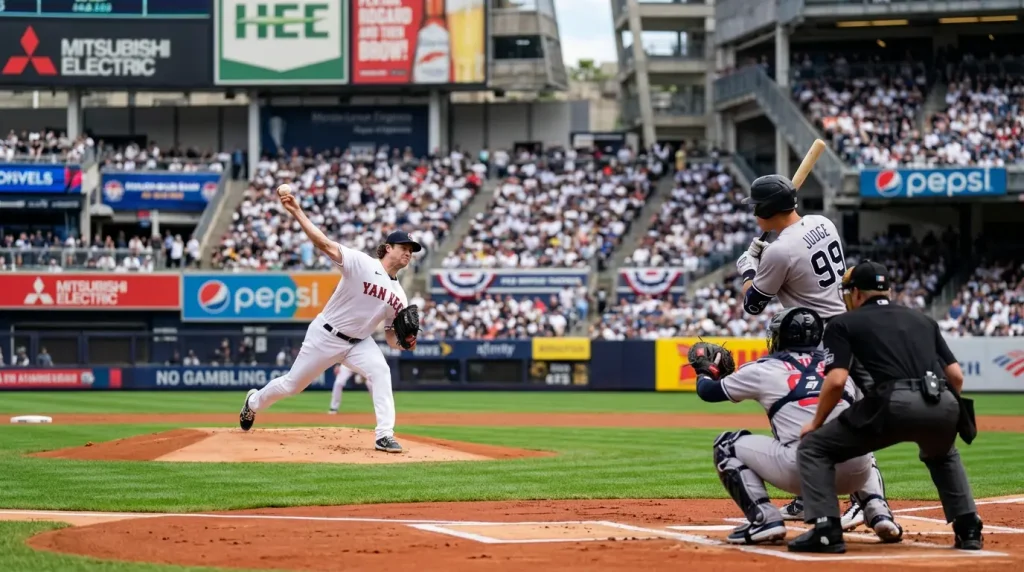
Modeling First Inning Scoring for Value Wagers
The first proper money I ever moved on a crypto sportsbook went into a NRFI bet on a Wednesday afternoon Mets game I was watching at 8 pm London time. NRFI is short for “no runs first inning” and YRFI is “yes runs first inning”. Two sides, one outcome, one inning, decided in roughly twelve minutes of game time. That compactness is the whole appeal – and the reason I have spent more time studying NRFI lines than any other baseball market.
What makes the first inning interesting to a bettor is structural. You know exactly which two pitchers are involved, you know the top of each lineup is fixed by the lineup card, and the variance window is short enough that you can build a model from a small set of inputs and actually trust it. Most baseball markets reward you for understanding the whole game; NRFI rewards you for understanding three batters and one pitcher per side. That is the kind of information asymmetry a careful bettor can lean into.
This guide is written from the point of view of someone betting MLB games from the UK with crypto, mostly through offshore books because the UK-licensed ones do not take crypto deposits. I will walk through how the market is settled, what to actually model, where to find the line on crypto sites, and how to size a stake without burning through bankroll on a market where a single broken-bat single can flip the outcome.
How the first-inning market actually settles
I once had a YRFI lose because the home team scored two in the bottom of the first – except they did not bat. The visiting team led 1-0 entering the bottom of the first, the home team rolled three quick outs, and the inning ended without the home half mattering. My bet still won, which is why this section exists.
NRFI settles “yes” only if no runs are scored across the top and bottom of the first inning. YRFI settles “yes” if at least one run is scored by either team during the first. The edge case that catches new bettors out is the bottom of the first when the home team is already leading and the game is in walk-off territory – except, of course, that cannot happen in the first inning, because the game has not been completed. So if the home team is up after the top and the third out is recorded in the bottom of the first, the bottom half played out as normal and any runs there count.
The trickier case is rain. If the game is suspended before the first inning is completed, almost every crypto book voids NRFI and YRFI tickets and refunds the stake. If the inning was completed before the suspension, the ticket settles on what happened. A handful of smaller books have unclear language here, which is why I always check the rules tab on the bet slip before placing the wager rather than assuming the standard applies. I have been burned exactly once by skipping that step.
Extra-inning rules do not affect this market because the bet only cares about inning one. If the game goes thirteen innings, your NRFI ticket already settled in the first thirty minutes of play. The “ghost runner” placed at second base in extras has no bearing on first-inning settlement either, despite some forum chatter to the contrary.
The inputs that actually move the line
If you take one thing from this section, take this: the standard ERA on the back of every pitcher’s card is the wrong number for NRFI modelling. ERA averages across all the innings a pitcher has thrown. First-inning runs scored against him is a different statistic, and the gap between the two is sometimes enormous. Some pitchers are notoriously slow starters – they need a clean inning to settle – and their first-inning ERA can sit one or two full runs above their season number. Others reverse that pattern and post first-inning numbers significantly below their average. Baseball Savant publishes inning-by-inning splits for free. Use them.
The second input is the lead-off batter’s on-base percentage against the relevant pitching hand. Not OPS, not batting average – OBP. NRFI wants to know whether the first man up is likely to reach base, because once a baserunner is on, a single, a wild pitch, a sacrifice fly, or even a productive groundout can scratch a run across. The leadoff hitter is on base or not, the next two batters drive him in or not. Two coin flips loosely correlated with three player profiles.
Then there is the trio behind him. If the two and three hitters in the lineup have a collective ISO above league average and the pitcher has a high HR/9, you have a meaningful chance of an opening-frame home run that single-handedly settles YRFI. I weight the slugging side of those two slots a little higher than the on-base side, since one swing can do the job by itself.
Park, weather, and time of day are tertiary but worth mentioning. Day games at Coors Field are essentially YRFI factories. A cold, breezy night at Oracle Park bends the model toward NRFI. Wind blowing in at any park drops first-inning run expectancy enough to be a tiebreaker on a marginal play.
For the more advanced bettor, xERA and barrel rate sharpen the picture. xERA strips out batted-ball luck and tells you how a pitcher should have performed; if a starter has a 4.50 ERA but a 3.20 xERA, the public NRFI line is probably overpricing him. Barrel rate against the leadoff trio tells you how often they hit the ball with the launch angle and exit velocity that produces extra-base damage. These are not magic numbers, but they push the model in the right direction on close calls.
Which crypto sites actually post the market
Not every crypto sportsbook offers NRFI and YRFI. The larger global operators do; the no-name books that materialised in the last two years often only post moneyline, run line and totals on baseball, with first-inning markets either missing or only available at game time. Cloudbet’s 2026 numbers help illustrate why – the platform reports coverage of more than forty sports and esports, and saw baseball volume grow alongside basketball, tennis and football, which means baseball gets the dedicated trader attention needed to price niche derivative markets. Smaller books skip these markets because the work to price them properly is not justified by the handle.
For perspective on where books actually invest their pricing attention: across the major fiat operators, hit-a-home-run props became the single most popular MLB market by volume in 2025. NRFI sits well down the list. That gap is partly why NRFI lines on smaller crypto sites can be lazier than the equivalent moneyline – the trading desk has spent its day refining the markets that bring the biggest handle, and a niche first-inning total inherits a less polished price.
If NRFI is missing, the first place I look is the alternates panel. Some books bury first-inning markets under “alternate totals” or “specials”, and the line is there even if it is not on the main slip. If it is genuinely absent, that tells you something about the book’s investment in baseball, which in turn is a useful signal about how sharp their core moneyline pricing is likely to be on smaller market games.
Stake size: small enough to survive a coin flip
NRFI is a high-variance, low-edge market. Even when your model is right, the inning is twelve minutes of luck. I treat first-inning bets as a third or a half of my standard MLB unit, never more. If your standard moneyline play is one percent of bankroll, NRFI is half a percent. If you are running a model that produces ten NRFI plays a day, you are almost certainly chasing thin edges that variance will eat before the season is out. Three to five carefully chosen plays a week is plenty. The discipline of saying no to a marginal NRFI is worth more than the discipline of finding the next edge.
If you found the first-inning angle interesting, the related question of how the broader pace-of-play change has reshaped live wagering is covered in my piece on how the MLB pitch clock changed crypto baseball betting – same compressed-window logic, applied to the whole game.
Articles
Written by the editors at BlockPlate.
